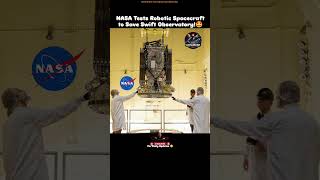
 Reference video
A video on the same topic from an external channel, separate from the reports analyzed here.
NASA and Katalyst Space Technologies Attempt Swift Telescope Rescue
Effort to save a $250-500 million telescope from orbital decay.
Event Overview
NASA contracted Arizona-based startup Katalyst Space Technologies for $30 million to save the Neil Gehrels Swift Observatory from burning up in Earth's atmosphere. The mission involves launching a robotic spacecraft, named LINK (or Lift), via a Northrop Grumman Pegasus XL rocket deployed from an L-1011 Stargazer jet. The LINK spacecraft is designed to rendezvous with and capture the telescope, which lacks docking ports, to raise its orbit from 224 miles to approximately 373 miles. The operation is urgent as solar maximum activity has accelerated orbital decay, with a potential point of no return in October.
Issue Summary
Bias Distribution
Bias Signal Summary
18 articles — 4 signal types detected.
Coverage Tone Distribution
· -Redder = higher bias. Larger area = more outlets. Click an outlet to jump to its position.
AI Analysis
Missing are the perspectives of the scientific community regarding the specific data loss if the mission fails, as well as critical analysis of the $30 million expenditure versus the cost of replacing the telescope's capabilities.
Related Coverage
Coverage flow
Coverage volume
Focus shift
Story timeline
Recommended Reads
'No one thought it was going to be possible.' A space telescope is falling out of space. This is NASA's daring plan to save it. - Space
space.com
NASA prepares to launch daring rescue to save aging telescope from falling to Earth - CBS News
CBS News
NASA races to save Swift telescope from falling back to Earth with daring rescue mission - Los Angeles Times
LA Times
Why NASA Is Launching a Mission to Save a Quarter-Billion Dollar Space Telescope
TIME
Coverage across the eight outlets was split between admiration for rapid commercial innovation (3 outlets) and tension over the high-stakes risks of the gamble (3 outlets), while two outlets focused on the shift toward sustainable space logistics and national capability.
The writer intends to portray the mission as a successful, innovative, and cost-effective synergy between government and private industry, framing the rescue as both a scientific necessity and a strategic demonstration of future space capabilities.
The writer intends to frame the mission as a high-stakes, daring technological gamble that could pioneer a new industry of orbital maintenance and salvage for the U.S.
The writer intends to present the mission as a necessary and innovative gamble, framing the use of a private space robot as a new, valuable capability for preserving 'national treasures' and critical scientific infrastructure that NASA cannot afford to replace.
The writer intends to frame the mission as a high-stakes, daring technological gamble that could pioneer a new industry of space servicing, instilling a sense of urgency and optimism about American innovation in the face of orbital decay.
The writer intends to convey a sense of urgency and high-stakes technical rescue, framing the mission as a critical race against time to save a valuable scientific asset from certain destruction.
The writer intends to present the mission as a daring, cost-effective, and innovative success of public-private partnership, instilling a sense of optimism about the future of satellite servicing and space exploration.
The writer intends to frame the technical operation as a high-stakes, urgent rescue mission to instill a sense of drama and tension in the reader.
The writer intends to frame the mission as a daring, high-stakes race against time, instilling a sense of admiration for the agility of commercial startups and the innovative potential of robotic satellite servicing.
Loading comments...