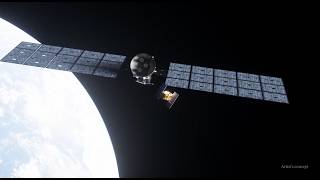
 Reference video
A video on the same topic from an external channel, separate from the reports analyzed here.
Northrop Grumman launches Link spacecraft to rescue Swift Observatory
Mission aims to prevent the Swift Observatory from burning up.
Event Overview
Northrop Grumman launched Katalyst Space Technologies’ Link spacecraft via a Pegasus rocket to rescue NASA's Swift Observatory. The telescope, launched in 2004, is losing altitude due to atmospheric drag caused by solar storms and is predicted to burn up by October. NASA paid $30 million for this fast-tracked nine-month mission to raise the telescope's altitude by approximately 150 miles.
Issue Summary
Bias Distribution
Bias Signal Summary
4 articles — 4 signal types detected.
Coverage Tone Distribution
· -Redder = higher bias. Larger area = more outlets. Click an outlet to jump to its position.
AI Analysis
Missing perspectives include a cost-benefit analysis regarding the $30 million expenditure for an aging telescope and technical insights into the long-term viability of using commercial "rescue" missions for orbital decay.
Related Coverage
Related Cards
Coverage flow
Coverage volume
Focus shift
Story timeline
Recommended Reads
NASA launches historic rescue mission to save falling telescope
CBS News
Rescue mission launches to save NASA telescope that's falling back to Earth thanks to solar storms - PBS
PBS
Rescue mission launches to save NASA telescope that’s falling back to Earth - AP News
AP News
NASA launched an emergency mission to stop the Swift Observatory from crashing to Earth - The Verge
theverge.com
Two of the three outlets highlighted the historic nature of the achievement and the impressive speed of the engineering, while one focused on the high-stakes tension of the rescue mission as a race against time.
The writer intends to present NASA's action as a significant and 'historic' achievement, instilling a sense of urgency and importance regarding the preservation of the telescope.
The writer intends to inform the reader about a high-stakes technical rescue mission, framing it as a race against time to save a valuable scientific asset from natural solar phenomena.
The writer intends to convey a sense of urgency and technical ambition, framing the mission as a critical 'rescue' to save a valuable scientific asset from an inevitable crash.
The writer intends to portray the mission as a high-stakes, impressive feat of rapid engineering and strategic investment to save a scientifically valuable asset.
Loading comments...