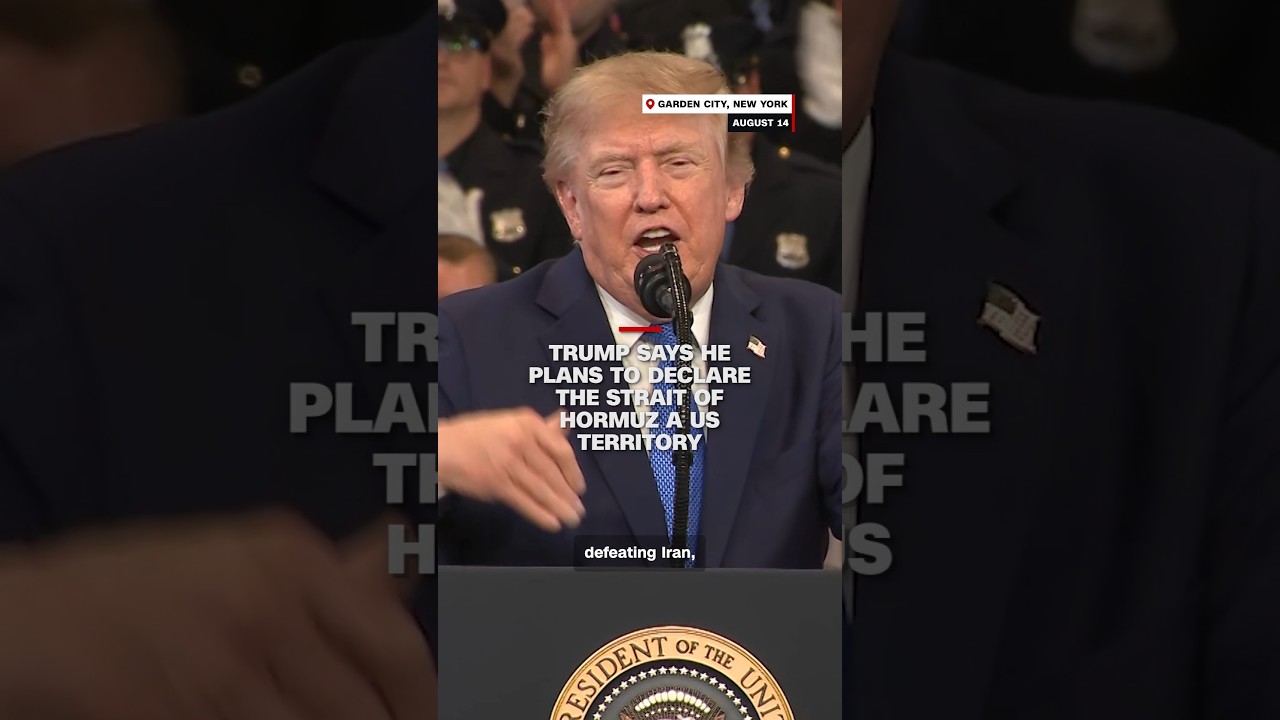
 Reference video
A video on the same topic from an external channel, separate from the reports analyzed here.
Donald Trump Claims Strait of Hormuz as US Territory
US claims control of strategic waterway amid war with Iran.
Event Overview
President Donald Trump announced plans to declare the Strait of Hormuz as United States territory, citing a naval blockade of Iranian ports. This claim occurs during an ongoing war between the US, Israel, and Iran that began on February 28. Trump argues the blockade is a necessary measure to prevent Iran from acquiring nuclear weapons, despite resulting in higher gas prices.
Issue Summary
Bias Distribution
Bias Signal Summary
4 articles — 4 signal types detected.
Coverage Tone Distribution
· ConflictRedder = higher bias. Larger area = more outlets. Click an outlet to jump to its position.
AI Analysis
2 of 4 articles focus on the strategic intent and decisiveness of the administration → a concentration on the executive's rationale → coverage centered on the administration's internal logic. 1 of 4 articles frames the announcement as part of a systemic pattern of expansionism → a shift toward systemic critique → coverage characterizing the move as a broader foreign policy trend. All 4 articles omit the legal perspectives of international maritime law or the reactions of neighboring Gulf states → a total absence of external legal and diplomatic frameworks → a substantial missing perspective regarding international legitimacy.
Critical coverage is slightly more prevalent than supportive or neutral views.
Related Coverage
Related Cards
Coverage flow
Coverage volume
Focus shift
Story timeline
Recommended Reads
Map Shows Areas Trump Has Sought to Control After Hormuz Remarks
Newsweek
Trump says he will declare Strait of Hormuz a US ‘territory’ amid Iran war - Al Jazeera
Al Jazeera
Trump Says U.S. Will Declare Strait of Hormuz ‘U.S. Territory’ — ‘After We Finish Defeating Iran’
Breitbart
Trump speaks on higher gas prices
NBC News
Coverage was split across four outlets: two framed the administration's actions as illegal or inflammatory violations of sovereignty, one viewed economic hardship as a strategic security necessity, and one portrayed the actions as dominant and successful.
The writer intends to frame Donald Trump as an expansionist leader whose foreign policy is characterized by a desire to unilaterally seize foreign territories and disregard international sovereignty.
The writer intends to present Trump's position that economic hardship (higher gas prices) is a strategic necessity for national security, framing it as a calculated tradeoff.
The writer intends to portray the Trump administration as dominant and decisive in its confrontation with Iran, framing the seizure of the Strait of Hormuz and the economic blockade as a successful, necessary strategy for global security.
The writer intends to portray Trump's claim as an inflammatory and legally dubious escalation that contradicts international law and domestic public opinion, framing the president's rhetoric as disconnected from the reality of a stalemated war.
🌏 Global Comparison
How Korean and US outlets report the same event differently, and propagation delay
Loading comments...