JUSTSUSS AI-powered press divergence analysis
8 outlets covered 2026.11.18 12:51 created · 11.18 21:27 updated
← Card Feed
Reference video

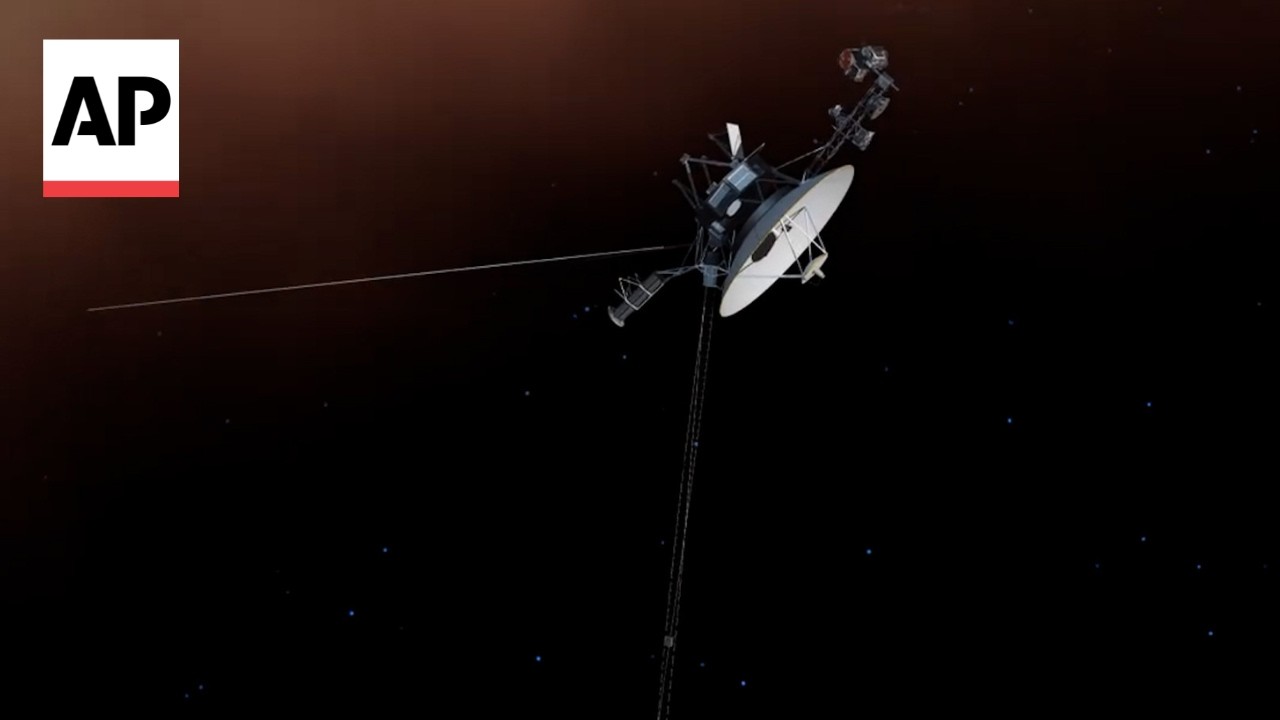
Voyager 1 Reaches One Light-Day Distance from Earth

The probe becomes the first spacecraft to reach this distance.

Event Overview

NASA's Voyager 1 probe reached a distance of one light-day from Earth, approximately 16 billion miles, on Wednesday. Launched in 1977, the probe is the most distant human-made object and entered interstellar space in 2012.

NASA's Jet Propulsion Laboratory is awaiting signal confirmation of the milestone and has scheduled an event to discuss the achievement. Project manager Suzanne Dodd described the milestone as an astounding feat.
Source facts (8)
1.

Voyager 1 reached a distance of one light-day from Earth, approximately 16 billion miles, on Wednesday.

NY Post
2.

The probe was launched in 1977.

NBC News
3.

Voyager 1 entered interstellar space in 2012.

NBC News
4.

Project manager Suzanne Dodd described the achievement as an astounding feat.

NY Post
5.

The probe continues to send data on magnetic fields, cosmic rays, and plasma waves.

NBC News
6.

The probe carries a gold-plated copper disk intended to represent human culture to extraterrestrial civilizations.

The Guardian
7.

Voyager 1 took the 'pale blue dot' photograph in 1990.

The Guardian
8.

The probe traveled past Jupiter and Saturn on its journey into interstellar space.

The Guardian

Message Distribution

factual relay NASA's Voyager 1 probe has reached the milestone of being one light-day away from Earth. 89%
8 articles
Al Jazeera — NASA’s Voyager 1 hits record one light-day distance, 50 years after launch - Al Jazeera
Message

Voyager 1 has reached the historic milestone of being one light-day away from Earth nearly 50 years after its launch.

WIRED — Voyager 1 Beat the Odds and Is Still Working a Light-Day Away From Earth - WIRED
Message

Voyager 1 is achieving a historic milestone by reaching one light-day from Earth while continuing to provide unique scientific data despite its age.

NBC News — A milestone for NASA’s Voyager 1 probe: A distance of one ‘light-day’ from Earth - NBC News
Message

NASA's Voyager 1 probe has reached the milestone of being one light-day away from Earth.

PBS — Voyager 1 is now a light-day from Earth. Here's what to know about NASA's longest-running mission - PBS
Message

Voyager 1 has reached the historic milestone of being one light-day away from Earth, serving as a testament to NASA's engineering and ongoing scientific discovery.

PBS — What we've learned from Voyager 1 as it reaches extraordinary milestone
Message

Voyager 1 has reached the extraordinary milestone of being one light-day away from Earth, marking a testament to human curiosity and engineering.

NY Post — NASA Voyager 1 probe believed to have accomplished ‘astounding feat’ in reaching milestone
Message

NASA's Voyager 1 probe has likely reached the milestone of being one light-day away from Earth.

ABC News — WATCH: NASA's Voyager 1 now a light-day away after 1977 launch
Message

NASA's Voyager 1 has traveled over 16 billion miles, making it the farthest human-made object in space.

WRAL — Voyager 1 reaches a milestone nearly 50 years in the making: One light-day from Earth - WRAL
Message

Voyager 1 has become the first human-made object to travel one light-day away from Earth, continuing its scientific mission despite extreme distance and aging hardware.

environmental urgency Voyager 1's milestone distance serves as a reminder of Earth's fragility and the urgent need for humanity to preserve its only home. 11%
1 articles
● The Guardian — After 49 years, Nasa’s Voyager 1 is one light-day away from us. Can we save this ‘pale blue dot’? |
Message

Voyager 1's milestone distance serves as a reminder of Earth's fragility and the urgent need for humanity to preserve its only home.

Editor's Analysis

A lonely milestone in the deep dark

The distance of one light-day is less about a physical coordinate and more about the lag in conversation. It means any greeting we send now takes twenty-four hours to arrive, and we must wait another full day for a reply. This delay turns a real-time dialogue into a slow exchange of letters, marking the point where the probe becomes truly detached from the immediate rhythm of Earth.

While the probe continues to send data on cosmic rays and plasma waves, it is running on a dwindling battery. The mission is now a race between the curiosity of the data it sends and the power-saving measures trying to keep it alive. It is a slow fade into the silence of interstellar space.

From technical milestones to existential sermons

NY Post and NBC News treated the news like a standard progress report. They focused on the numbers and the timeline, delivering the facts with the efficiency of a flight manual. For them, the story is a successful piece of engineering reaching a predicted milestone.

The Guardian took a sharp turn away from the hardware. It used the probe as a mirror to reflect on human greed and the fragility of the planet, transforming a space achievement into a lecture on environmental stewardship. While it provided the most emotional context by mentioning the gold-plated disk and the famous photograph of Earth, it shifted the focus from the probe's journey to a critique of current economic priorities.

Most coverage stayed on the surface of the achievement. The reader gets the distance and the deadline, but the press largely ignored the technical struggle of maintaining a link across such a void. They reported the milestone as a victory, omitting the irony that the further we reach, the harder it becomes to actually hear what we found.

Updates

Nov 19 · Voyager 1 cameras disabled to conserve power Updated 21:27

NASA engineers are managing the mission by switching off non-essential devices to conserve energy, including the probe's cameras, though three experiments remain active. The spacecraft relies on decaying plutonium-238 for power, and its mission is expected to end in three to five years as that power decays, although mission managers remain optimistic about extending the probe's operational life through creative technical solutions. Voyager 1 was launched in 1977 alongside Voyager 2, crossed the heliopause in 2012, and has traveled approximately 16.094 billion miles, reaching a distance of approximately 26 billion kilometers from Earth. Al Jazeera reports that Voyager 1 and Voyager 2 are the only human-made objects to reach interstellar space. Communication with the probe now takes a full day each way via the Deep Space Network, with signals received from the probe having faded to 100 attowatts and a data transmission rate of 40 bytes per second. Voyager 1 is heading toward the star Gliese 445, a journey estimated to take roughly 40,000 years. NASA scientist Tiffany Kataria noted that it would take Voyager 1 about 18,000 years to travel a single light-year. Science correspondent Miles O'Brien stated that Voyager 1 is currently studying plasma and magnetic fields beyond the sun's heliosphere, and the probe discovered volcanoes on Io and a subsurface ocean on Europa.

Source facts (18)

NASA engineers are managing the mission by switching off non-essential devices to conserve energy.

WIRED

The spacecraft's mission is expected to end in three to five years as its nuclear power decays.

WIRED

Mission managers remain optimistic about extending the probe's operational life through creative technical solutions.

WIRED

Voyager 1 was launched in 1977 alongside Voyager 2.

PBS

Communication with the probe now takes a full day each way via the Deep Space Network.

PBS

Three experiments remain active on the probe despite power conservation measures.

PBS

Voyager 1 crossed the heliopause in 2012.

PBS

Voyager 1 has traveled approximately 16.094 billion miles.

WRAL

Signals received from the probe have faded to 100 attowatts.

WRAL

The probe's data transmission rate is 40 bytes per second.

WRAL

The spacecraft relies on decaying plutonium-238 for power.

WRAL

Voyager 1 is heading toward the star Gliese 445, a journey estimated to take roughly 40,000 years.

WRAL

Science correspondent Miles O'Brien explains that Voyager 1 is currently studying plasma and magnetic fields beyond the sun's heliosphere.

PBS

Voyager 1 discovered volcanoes on Io and a subsurface ocean on Europa.

PBS

Voyager 1 has reached a distance of approximately 26 billion kilometers from Earth.

Al Jazeera

NASA scientist Tiffany Kataria noted that it would take Voyager 1 about 18,000 years to travel a single light-year.

Al Jazeera

Voyager 1 and Voyager 2 are the only human-made objects to reach interstellar space.

Al Jazeera

Cameras on the probe have been disabled to conserve power.

Al Jazeera

Coverage flow

Coverage volume

11/18 · 9

Focus shift

11/18
NASA
4
CU
1
Voyager 1
1

Recommended Reads

News Story

Story: NASA Voyager 1 Spacecraft Communication Outage

Card 4 of 4 in this story

NASA Voyager 1 Spacecraft Communication Outage
Oct 30 · 1 outlets
Where it started
Voyager 1 to reach one light-day distance from Earth
Nov 1 · 12 outlets
↳ Follows “NASA restores communications with Voyager 1”
NASA restores communications with Voyager 1
Nov 3 · 1 outlets
↳ Follows “NASA Voyager 1 Spacecraft Communication Outage”
Voyager 1 Reaches One Light-Day Distance from Earth
Nov 18 · 8 outlets · Viewing now
↳ Follows “Voyager 1 to reach one light-day distance from Earth”

Loading comments...