 Reference video
A video on the same topic from an external channel, separate from the reports analyzed here.
Volunteer discovers rare Declaration of Independence copy
First known Exeter Declaration found outside the US.
Event Overview
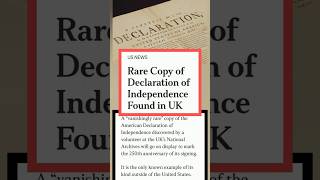
Volunteer Michael Scurr discovered a rare 1776 Exeter printing of the Declaration of Independence while cataloging documents at the UK National Archives. The document was seized by the British Royal Navy from the American privateer ship Dalton off the coast of Portugal in December 1776. It is one of only 11 known copies of this specific printing and the only one located outside the United States.
Issue Summary
Bias Distribution
Bias Signal Summary
Coverage Tone Distribution
· -Redder = higher bias. Larger area = more outlets. Click an outlet to jump to its position.
AI Analysis
Missing perspectives include insights from historians specializing in the American Revolution and legal experts regarding the ownership or repatriation of the document. There is also a lack of commentary from the UK National Archives regarding the preservation and future exhibition of the find.
Related Coverage
Coverage flow
Coverage volume
Focus shift
Story timeline
Recommended Reads
UK Finding Copy of US Declaration of Independence ‘Astonishing’—Historian
Newsweek
"Vanishingly rare" copy of Declaration of Independence found in U.K. by volunteer - CBS News
CBS News
Rare copy of Declaration of Independence seized in 1776 uncovered in London - NBC News
NBC News
Rare copy of Declaration of Independence found by UK National Archives in papers of captured U.S. privateer ship - PBS
PBS
Most outlets framed the discovery through a lens of wonder and serendipity (3), while others emphasized scientific preservation and the humanization of history (2) or presented the find as a historical curiosity (1).
The writer intends to frame the discovery as a significant and exciting historical event, instilling a sense of wonder regarding the survival of fragile documents and the enduring international link between the UK and the US.
The writer intends to convey the excitement and historical significance of a serendipitous discovery, instilling in the reader a sense of wonder regarding how a pivotal historical document survived in an unlikely location.
The writer intends to present the discovery as a serendipitous and historically significant event, instilling in the reader a sense of wonder regarding the hidden treasures still residing in physical archives.
The writer intends to present the discovery as a poignant and exciting historical find that humanizes the American Revolution, shifting the focus from land battles to the maritime struggle and the ideological motivations of the sailors.
The writer intends to present the discovery as a thrilling and significant historical find, emphasizing the document's rarity and the meticulous scientific process used to preserve it to evoke a sense of wonder and historical continuity.
The writer intends to inform the reader of a significant historical find, framing it as a curiosity of war and archival discovery to evoke a sense of historical serendipity.
Loading comments...