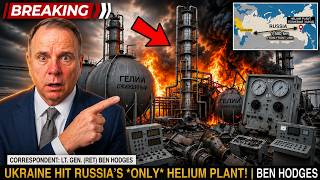
 Reference video
A video on the same topic from an external channel, separate from the reports analyzed here.
Ukraine Targets Russian Energy Infrastructure
Strikes impact Russian fuel supplies and war revenue.
Event Overview
Ukraine has escalated a long-range drone campaign targeting Russian oil refineries and military infrastructure, including sites in Slavyansk-na-Kubani, Yaroslavl, and Krasnodar Krai. These attacks have caused financial losses estimated at $13 billion in 2025 and led to fuel shortages and rationing in regions such as Irkutsk and Crimea. President Vladimir Putin has acknowledged a 'certain deficit' of fuel, while President Zelenskyy describes the strikes as 'long-range sanctions' to weaken Russia's war machine.
Issue Summary
Bias Distribution
Bias Signal Summary
7 articles — 3 signal types detected.
Coverage Tone Distribution
· -Redder = higher bias. Larger area = more outlets. Click an outlet to jump to its position.
AI Analysis
Missing are the perspectives of Russian civilians affected by fuel rationing and the viewpoints of international energy analysts regarding the global impact of disrupted Russian oil exports.
Related Coverage
Related Cards
Coverage flow
Coverage volume
Focus shift
Story timeline
Recommended Reads
Ukrainian forces strike two oil refineries in Russia - Euronews
euronews.com
Ukraine’s drone campaign against Russia’s energy infrastructure takes a toll, but falls short of a game changer
Washington Examiner
Ukraine drones ignite Russian refinery as Putin acknowledges fuel shortages - South China Morning Post
SCMP
Putin admits fuel shortages as Ukrainian drones set another Russian oil refinery ablaze
NY Post
Four of five outlets view Ukrainian strikes as effective strategic tools for degrading Russian resources and stability, while only one characterizes the drone campaign as a costly nuisance rather than a strategic victory.
The writer intends to frame Ukraine's attacks on energy infrastructure as a strategic necessity to degrade Russia's economic ability to fund the war, while positioning these actions within the context of a broader, intense Russian aerial campaign against Ukraine.
The writer intends to portray Ukrainian drone strikes as an effective strategic tool that is successfully degrading Russia's internal stability and economic resources, forcing the Russian leadership to admit vulnerability.
The writer intends to frame Ukraine's drone campaign as a strategic effort to degrade Russia's economic and military capacity, suggesting these attacks serve as a catalyst to force the Kremlin toward negotiations.
The writer intends to portray Ukrainian strikes as effective and strategically successful in degrading Russian logistics, while framing these actions as a justified response to Russian aggression.
The writer intends to convey that Ukraine's strategic targeting of energy infrastructure is effectively creating internal instability and resource deficits within Russia, thereby challenging the Kremlin's narrative of resilience.
The writer intends to frame Ukraine's drone campaign as a strategic 'long-range sanction' designed to degrade Russia's war capabilities and force a diplomatic resolution, positioning the attacks as a calculated step toward peace.
The writer intends to temper expectations regarding Ukraine's drone campaign, framing it as a costly nuisance and a tool for degradation rather than a decisive strategic victory, thereby instilling a sense of Russian resilience in the reader.
Loading comments...