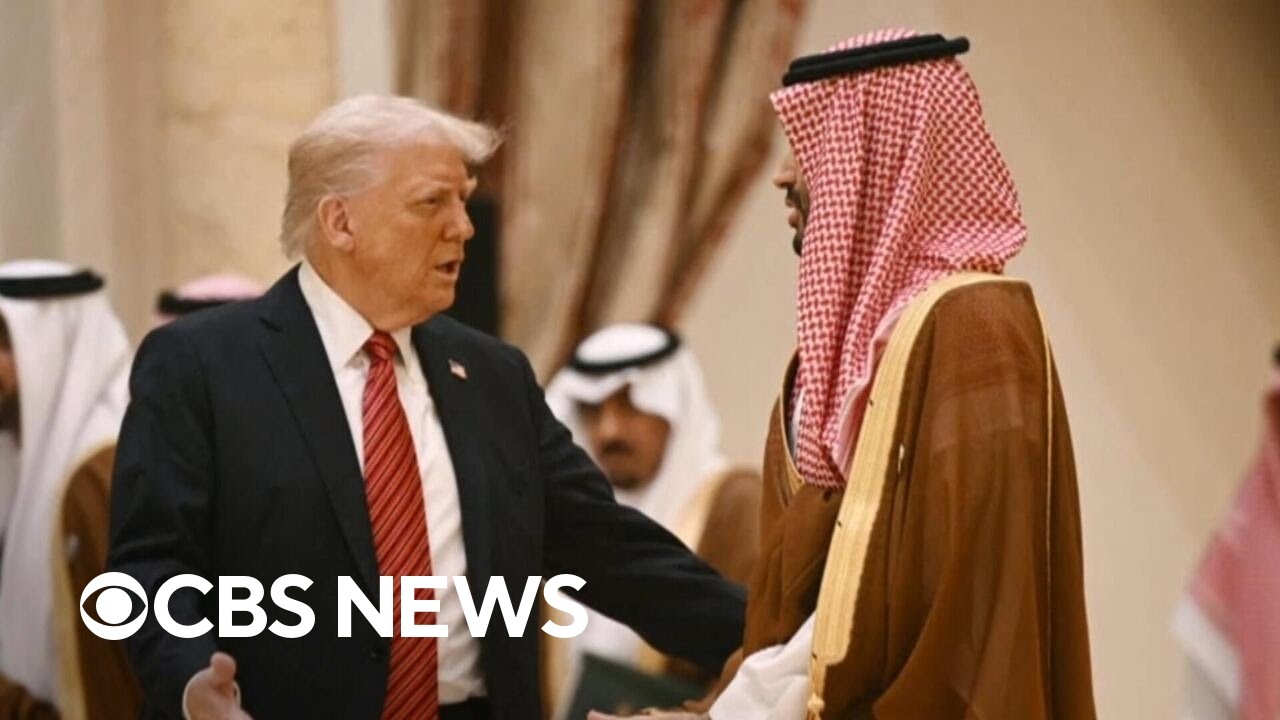
 Reference video
A video on the same topic from an external channel, separate from the reports analyzed here.
U.S. and Saudi Arabia Sign Nuclear Cooperation Agreement
Deal sparks debate over proliferation and regional diplomacy.
Event Overview
The United States and Saudi Arabia signed a Section 123 nuclear cooperation agreement to develop a civilian nuclear program for energy and AI data centers. While the U.S. Department of Energy announced the deal, President Trump later stated it is contingent on Saudi Arabia joining the Abraham Accords to normalize relations with Israel. The agreement has drawn criticism from experts regarding potential concessions on uranium enrichment and international inspections.
Issue Summary
Bias Distribution
Bias Signal Summary
44 articles — 6 signal types detected.
Coverage Tone Distribution
· ConflictRedder = higher bias. Larger area = more outlets. Click an outlet to jump to its position.
AI Analysis
Across 4 articles, the mention of the Abraham Accords and Israeli security interests in 2 of 4 reports indicates a pattern of framing the deal as a geopolitical leverage tool rather than a purely technical agreement. In 2 of 4 articles, the focus on the erosion of international safeguards and reckless policy suggests a pattern of prioritizing security risks over diplomatic gains. Only 1 outlet mentions the strategic economic win for U.S. industry and technology exports, revealing a substantial missing perspective regarding the specific commercial benefits for American companies.
Critical coverage dominates with mid-to-high intensity bias.
Related Coverage
Coverage flow
Coverage volume
Focus shift
Story timeline
Recommended Reads
Watch: What we know about the US-Saudi nuclear deal
BBC
U.S. and Saudis sign nuclear deal, contingent on joining Abraham Accords
CBS News
WATCH: Democrats blast Trump Saudi nuclear deal as GOP touts regional alliance - Fox News
Fox News
How Trump upended the Saudi nuclear deal less than 24 hours after its signing - CNN
CNN
Coverage was largely critical, with 13 of 19 outlets portraying leadership as incompetent or framing the deal as a high-risk strategic blunder. In contrast, 6 outlets focused on the political polarization surrounding the deal or presented it as a strategic and economic necessity.
The writer intends to provide a platform for expert commentary on a geopolitical event, expecting the reader to view the linked video for the actual analysis.
The writer intends to frame the nuclear deal as a high-risk gamble that contradicts U.S. efforts to stop Iranian proliferation and undermines global non-proliferation standards.
The writer intends to present the deal as a commercial opportunity that carries significant geopolitical risks, specifically by contrasting the administration's claims of safety with the factual absence of 'gold standard' nonproliferation safeguards.
The writer intends to present the agreement as a strategic economic win for U.S. industry and a geopolitical necessity to prevent Saudi Arabia from turning to rivals, while acknowledging the diplomatic friction it causes regarding regional stability.
The writer intends to instill a sense of alarm and skepticism in the reader, framing the nuclear deal as a strategic blunder that trades long-term regional stability and Israeli security for a superficial diplomatic victory.
The writer intends to inform the reader of a new diplomatic agreement while immediately framing it as a source of domestic political conflict and security risk.
The writer intends to portray Donald Trump as a hypocritical and incompetent leader whose foreign policy is driven by greed and ego rather than principle, leading the reader to view the war in Iran as pointless and the Saudi deal as a dangerous contradiction.
The writer intends to notify the reader of a significant diplomatic event and direct them to a video for detailed analysis, positioning the BBC as the source for explaining the deal's implications.
The writer intends to inform the reader that the Trump administration is using a nuclear deal as leverage to push Saudi Arabia toward diplomatic normalization with Israel via the Abraham Accords.
The writer intends to portray Trump's addition of the normalization condition as an abrupt, unexpected move that complicates an already controversial deal, highlighting the gap between the administration's public claims and the actual terms of the agreement.
Loading comments...