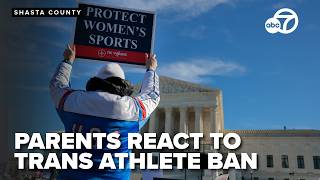
 Reference video
A video on the same topic from an external channel, separate from the reports analyzed here.
Supreme Court Upholds State Bans on Transgender Athletes
Ruling impacts sports eligibility and Title IX interpretation.
Event Overview
The U.S. Supreme Court ruled 6-3 in West Virginia v. B.P.J. and Little v. Hecox that states may reserve women's sports for biological females. The decision upheld bans on transgender girls in school sports in Idaho and West Virginia, finding they do not violate the 14th Amendment or Title IX. Following a Trump executive order in January 2025, NCAA President Charlie Baker stated the organization will maintain its ban on transgender athletes in women's sports.
Issue Summary
Bias Distribution
Bias Signal Summary
4 articles — 6 signal types detected.
Coverage Tone Distribution
· -Redder = higher bias. Larger area = more outlets. Click an outlet to jump to its position.
AI Analysis
Missing are the perspectives of the female athletes who support these bans based on fairness and biological advantages, as well as the firsthand experiences and legal arguments of the transgender athletes directly affected by the ruling.
Related Coverage
Related Cards
Coverage flow
Coverage volume
Focus shift
Story timeline
Recommended Reads
Hiltzik: How right-wing anti-transgender attacks led to a Supreme Court ruling upholding sex discrimination
LA Times
NCAA president expects no changes to trans athlete rules after US supreme court ruling - The Guardian
The Guardian
Here’s The Big Question SCOTUS Left Unanswered In Its Women’s Sports Ruling
The Federalist
Coverage was split across three distinct perspectives: one outlet criticized Justice Jackson's judicial fitness, another framed the ruling as political discrimination against minorities, and one provided a neutral analysis of NCAA policy compliance.
The writer intends to portray Justice Jackson as an ideologue who prioritizes 'gender ideology' over biological facts and legal rigor, leading the reader to believe she is intellectually unfit for the Supreme Court.
The writer intends to frame the Supreme Court's ruling not as a protection of women's rights, but as a politically motivated act of discrimination against a vulnerable minority. The reader is expected to perceive the conservative majority and Donald Trump as bullies using 'biological truth' as a pretext for ideological warfare.
The writer intends to portray the NCAA's current policy as a direct result of political pressure from the Trump administration and the judiciary, framing the organization's stance as one of compliance rather than independent policy-making.
The writer intends to frame the Supreme Court's refusal to define transgender status as a non-suspect class as a strategic failure or 'loophole' that empowers 'pro-trans activists' to continue their 'lawfare' against biological reality.
Loading comments...