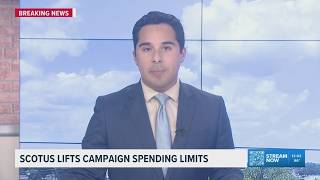
 Reference video
A video on the same topic from an external channel, separate from the reports analyzed here.
Supreme Court Lifts Coordinated Campaign Spending Limits
Ruling removes spending caps on party-candidate coordination.
Event Overview
The Supreme Court ruled 6-3 in NRSC v. FEC that federal limits on coordinated spending between political parties and candidates violate the First Amendment. Justice Brett Kavanaugh wrote the majority opinion, stating these limits are not necessary to prevent corruption. The decision overturns a 2001 precedent and allows parties to spend unlimited amounts in coordination with campaigns, particularly on advertising.
Issue Summary
Bias Distribution
Bias Signal Summary
19 articles — 11 signal types detected.
Coverage Tone Distribution
· -Redder = higher bias. Larger area = more outlets. Click an outlet to jump to its position.
AI Analysis
Missing perspectives include the specific viewpoints of non-partisan election law experts and the potential impact on third-party candidates who lack the infrastructure of major political parties. There is also a lack of analysis regarding how this ruling affects the internal power dynamics between individual candidates and their party leadership.
Related Coverage
Coverage flow
Coverage volume
Focus shift
Story timeline
Recommended Reads
Supreme Court loosens campaign finance laws, opening up flood of midterm cash
Politico
Supreme Court erases party spending limits in federal elections
AP News
Supreme Court rolls back longstanding campaign finance restrictions
ABC News
A Supreme Court Decision That Might Improve Politics
The Atlantic
Coverage of the ruling is divided, with 6 outlets framing it as a catalyst for corruption and democratic erosion, while 5 analyze it as a strategic GOP victory. The remaining outlets are split between neutral reporting on legal shifts (3) and supportive framing of the decision as a win for First Amendment rights (3).
The writer intends to frame the ruling as a victory for the GOP that will significantly increase the flow of money into political advertising, potentially influencing the midterm elections.
The writer intends to convey that the ruling creates a systemic financial advantage for the GOP by leveraging their superior party-level fundraising and large-donor base, while framing the decision as part of a broader trend of judicial deregulation that favors wealthy interests.
The writer intends to frame the Supreme Court's decision as a destructive act that facilitates political corruption and grants an unfair advantage to wealthy donors and the Republican Party.
The writer intends to frame the ruling as a victory for the Republican party's financial interests and a continuation of a conservative judicial trend toward deregulation of campaign finance.
The writer intends to inform the reader of a specific legal change regarding campaign finance, presenting the ruling as a matter of constitutional law (First Amendment).
The writer intends to persuade the reader that a seemingly negative campaign-finance ruling is actually a positive development because it shifts power from unaccountable super PACs back to accountable political parties.
The writer intends to inform the reader of a legal shift in campaign finance, framing the event as the removal of 'longtime' restrictions following a challenge by a specific political figure.
The writer intends to present the ruling as a victory for First Amendment rights and party equality, while framing the opposition's view as a concern over the circumvention of existing rules.
The writer intends to frame the ruling not just as a legal victory for Republicans, but as a systemic expansion of the influence of money in the American political process.
The writer intends to frame the ruling as a dangerous opening for political corruption by centering the narrative on Justice Kagan's stark warnings and the potential for 'untold harm'.
Loading comments...