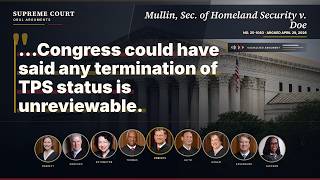
 Reference video
A video on the same topic from an external channel, separate from the reports analyzed here.
Supreme Court Rules on Trump Immigration Policies
The ruling expands executive power over immigration status.
Event Overview
The Supreme Court issued opinions allowing the termination of Temporary Protected Status (TPS) and the ability to turn away asylum seekers. These decisions impact the deportation status of Syrian and Haitian immigrants and potentially millions of others. The rulings are characterized by a significant ideological divide between the majority and dissenting justices.
Issue Summary
Bias Distribution
Bias Signal Summary
24 articles — 7 signal types detected.
Coverage Tone Distribution
· -Redder = higher bias. Larger area = more outlets. Click an outlet to jump to its position.
AI Analysis
Missing are the firsthand perspectives of the affected Syrian and Haitian immigrants and the viewpoints of humanitarian organizations regarding the practical impact on these populations. There is also a lack of analysis from immigration law experts on the long-term precedents these rulings set for future asylum claims.
Related Coverage
Coverage flow
Coverage volume
Focus shift
Story timeline
Recommended Reads
Supreme Court rules Trump can remove deportation protection from Haitians, Syrians
NY Post
Transgender Athletes, Birthright and Ballots: SCOTUS to Test Trump Agenda
Newsweek
Supreme Court clears way for Trump admin to revive restrictive immigration policy
ABC News
Supreme Court rules Trump may end legal protection for Haitians and Syrians
LA Times
The majority of the 22 outlets (14) framed the ruling as a moral failure and an endorsement of racism or unconstrained power, while 5 viewed it as a legitimate legal victory against obstructive opposition. The remaining 3 outlets focused on factual updates or the clash of legal interpretations.
The writer intends to frame the Supreme Court's decision as a precarious turning point that threatens the stability of over a million immigrants, emphasizing the humanitarian risks and the potential for widespread deportation over the administration's legal arguments.
The writer intends to frame the court's decision as a significant expansion of executive power over immigration, emphasizing the scale of the potential impact (millions of people) to instill a sense of urgency or alarm in the reader.
The writer intends to portray Democratic reactions to the court rulings as irrational and hysterical ('melt down', 'fit of apoplexy') while framing the rulings themselves as a positive restoration of federal law and national sovereignty.
The writer intends to frame the Supreme Court's ruling as a victory for executive power over humanitarian protections, while suggesting the administration's decision-making process was arbitrary, ignored internal warnings, and bypassed required inter-agency consultations.
Loading comments...