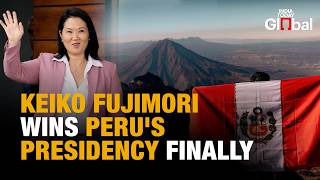
 Reference video
A video on the same topic from an external channel, separate from the reports analyzed here.
Keiko Fujimori Wins Peru Presidential Election
Conservative leader wins narrow victory amid crime crisis.
Event Overview
Conservative politician Keiko Fujimori won Peru's presidential runoff election, defeating nationalist and left-wing candidate Roberto Sánchez. Fujimori received approximately 50.1% of the vote, with the final margin being fewer than 50,000 votes. She campaigned on a platform of combating organized crime and extortion with an 'iron fist' and attracting private investment. The U.S. State Department has congratulated her following the result.
Issue Summary
Bias Distribution
Bias Signal Summary
6 articles — 5 signal types detected.
Coverage Tone Distribution
· -Redder = higher bias. Larger area = more outlets. Click an outlet to jump to its position.
AI Analysis
Missing are the perspectives of the Peruvian electorate, specifically those who voted for Roberto Sánchez, and the views of human rights organizations regarding the "iron fist" approach to crime. There is also a lack of analysis concerning the potential for civil unrest or political instability given the extremely slim margin of victory.
Related Coverage
Coverage flow
Coverage volume
Focus shift
Story timeline
Recommended Reads
Keiko Fujimori declared winner of Peru's presidential election weeks after vote - BBC
BBC
State Department congratulates Keiko Fujimori as Peru's president-elect following razor-thin vote count
Fox News
Keiko Fujimori officially declared winner of Peru presidential race - Al Jazeera
Al Jazeera
Peru’s Keiko Fujimori wins presidential election, in latest victory for Latin American right - The Guardian
The Guardian
Two of the three outlets viewed Fujimori's victory critically, framing it as a right-wing populist surge with autocratic risks, while one outlet saw it as a strategic win for regional stability and U.S. interests.
The writer intends to frame Fujimori's victory not as a decisive mandate, but as a narrow win within a broader regional trend toward right-wing populism and security-focused governance.
The writer intends to frame Fujimori's victory as a strategic win for U.S. interests in Latin America, positioning her as a necessary bulwark against Chinese influence and regional instability.
The writer intends to frame Fujimori's victory as part of a broader right-wing surge in Latin America while cautioning the reader about her autocratic family legacy and the fragility of her win.
The writer intends to present Fujimori's victory as a definitive outcome of a competitive election, framing her as a conservative leader focused on security who has the backing of the U.S. government.
The writer intends to present the election result as officially settled while framing the incoming presidency as precarious due to a razor-thin margin, a history of instability, and a divided legislature.
The writer intends to present Fujimori's victory as a symptom of a regional conservative trend driven by security crises, while ensuring the reader is aware of her father's authoritarian and criminal legacy.
Loading comments...