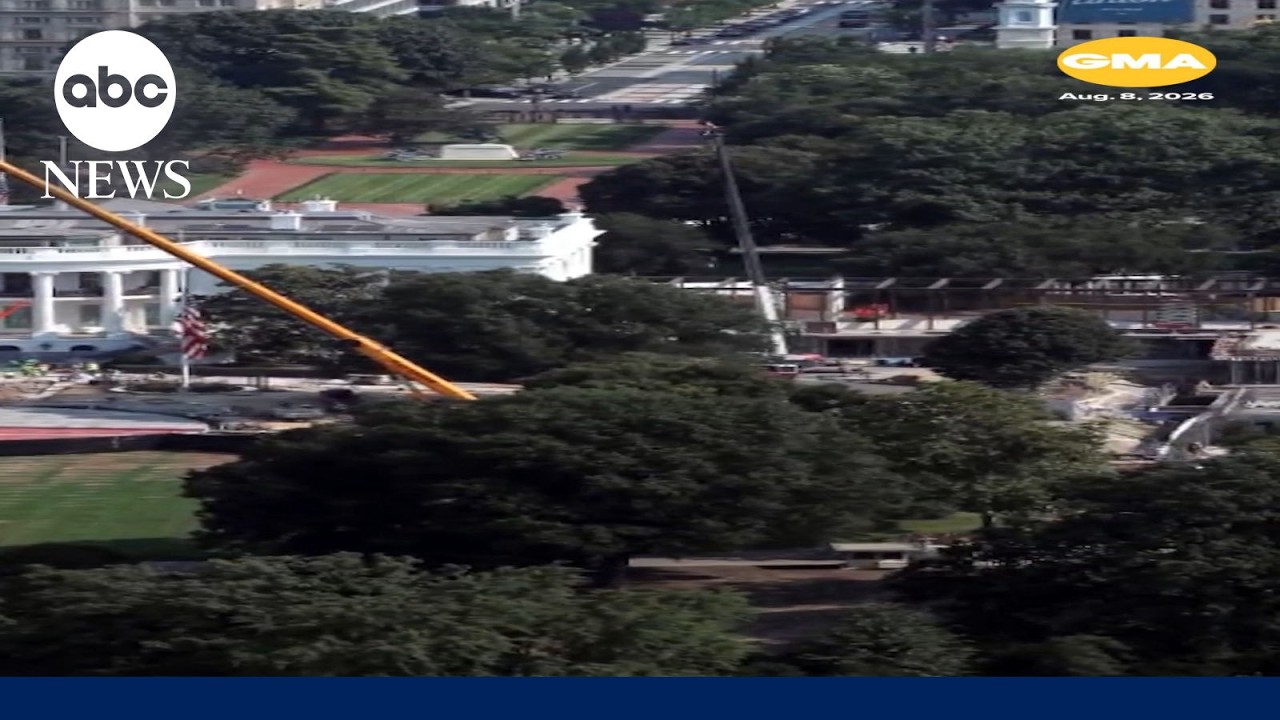
 Reference video
A video on the same topic from an external channel, separate from the reports analyzed here.
D.C. Circuit Court Halts White House Ballroom Construction
Court rules on presidential authority to alter federal property.
Event Overview
A federal appeals court upheld a preliminary injunction blocking President Donald Trump from constructing a 90,000-square-foot ballroom at the White House. The court ruled that the President lacks the authority to unilaterally demolish and rebuild federal property without congressional approval. The project, estimated at $400 million and largely funded by private donations, was challenged by the National Trust for Historic Preservation. President Trump has vowed to appeal the decision to the U.S. Supreme Court.
Issue Summary
Bias Distribution
Bias Signal Summary
28 articles — 4 signal types detected.
Coverage Tone Distribution
· AlignedRedder = higher bias. Larger area = more outlets. Click an outlet to jump to its position.
AI Analysis
The D.C. Circuit's ruling on the separation of powers is highlighted by 2 of 4 outlets, showing a pattern of legal justification that describes the decision as a necessary victory for the rule of law. The aggressive reactions of administration officials are emphasized by 1 of 4 outlets, creating a pattern of behavioral critique that describes the administration's response as irrational and hyperbolic. Despite the project's $400 million cost and private funding, only 1 outlet focuses on the potential failure of the legal challenge at the Supreme Court, leaving a substantial missing perspective regarding the specific financial mechanisms and the validity of the National Trust for Historic Preservation's standing.
Critical coverage dominates with mid-to-high intensity bias.
Related Coverage
Coverage flow
Coverage volume
Focus shift
Story timeline
Recommended Reads
News Wrap: Court rules Trump needs Congress to approve White House ballroom
PBS
Appeals court blocks Trump's White House ballroom, teeing up Supreme Court fight
CBS News
Trump ordered by appeals court to stop White House ballroom construction
NY Post
D.C. Circuit Upholds Injunction Against Trump's Ballroom
Reason
The majority of the 18 outlets (12) framed the court's decision as a victory for the rule of law and a necessary check on executive power. In contrast, four outlets characterized the legal actions as irrational or frivolous, while two provided neutral summaries of the events.
The writer intends to provide a neutral, rapid-fire summary of diverse global and national events, positioning the outlet as a comprehensive source of daily news updates.
The writer intends to frame the court's ruling as an illegitimate, politically motivated obstruction of a vital national security project, positioning Trump as a provider of essential protections for the presidency.
The writer intends to frame the court's decision as a significant legal defeat for the administration, emphasizing the lack of congressional approval for the project.
The writer intends to present the court's decision as a necessary check on executive overreach, framing the president's actions as unprecedented and potentially unconstitutional.
The writer intends to frame the construction project as an overreach of executive power, positioning the court's decision as a necessary check to protect a public asset from a president's personal desires.
The writer intends to frame the court's decision as a 'setback' for the President while highlighting the ideological divide between the judges and the administration's struggle to secure funding.
The writer intends to frame the issue as a constitutional conflict over the limits of presidential power versus congressional authority, positioning the court as a check on executive overreach.
The writer intends to frame the Trump administration's actions as an unprecedented and illegal overreach of executive power, emphasizing the court's view that the President is a temporary tenant rather than an owner of the White House.
The writer intends to frame the Trump administration's actions as an unprecedented overreach of executive power, positioning the court's ruling as a necessary constitutional check on the President's authority over public property.
The writer intends to frame the court's decision as a victory for constitutional checks and balances over executive overreach, positioning the president as a 'temporary tenant' rather than an owner of national landmarks.
Loading comments...