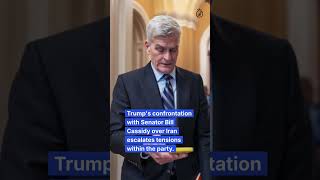
 Reference video
A video on the same topic from an external channel, separate from the reports analyzed here.
Senate Rejects War Powers Resolution
Senate blocks resolution restricting presidential war powers.
Event Overview
The Senate rejected a resolution regarding war powers, including one specifically concerning Iran. The outcome followed a GOP whip operation involving Thune and Barrasso, as well as pressure from President Trump. Several GOP members, including Senators Cassidy and Paul, changed their votes after internal briefings and interactions.
Issue Summary
Bias Distribution
Bias Signal Summary
4 articles — 2 signal types detected.
Coverage Tone Distribution
· -Redder = higher bias. Larger area = more outlets. Click an outlet to jump to its position.
AI Analysis
Missing are the perspectives of the senators who changed their votes regarding the specific policy justifications provided in the internal briefings, as well as the viewpoints of the resolution's proponents.
Related Coverage
Related Cards
Coverage flow
Coverage volume
Focus shift
Story timeline
Recommended Reads
GOP senators switch votes to reject measure curbing Trump’s war powers
Washington Examiner
In reversal, Senate votes to block war powers resolution, delivering Trump a win
ABC News
Senate rejects measure to restrict Trump's Iran war powers as key Republicans shift
CBS News
Closed-door outburst turns into victory for Trump’s Iran negotiations - Fox News
Fox News
Coverage was split across three perspectives: two outlets framed the event as a decisive political victory and display of strength, while one attributed the outcome to presidential pressure and volatility, and another viewed it as a demonstration of Trump's influence over GOP dissenters.
The writer intends to frame the event as a personal and political victory for President Trump, emphasizing his ability to exert influence over dissenting members of his own party to secure a legislative win.
The writer intends to frame the event as a demonstration of Trump's influence over GOP dissenters, specifically highlighting the rapid reversal of Senator Cassidy to suggest a pattern of submission following presidential pressure.
The writer intends to portray the legislative outcome not as a principled policy debate, but as a result of presidential pressure and interpersonal volatility, leading the reader to perceive the GOP's alignment as a reaction to Trump's temperament rather than a shift in strategic conviction.
The writer intends to frame the event as a decisive political victory for President Trump, portraying him as a successful negotiator who can sway his own party and project strength to foreign adversaries.
Loading comments...