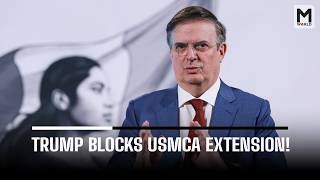
 Reference video
A video on the same topic from an external channel, separate from the reports analyzed here.
Trump Administration Declines USMCA Renewal
U.S. rejects long-term extension to address trade deficits.
Event Overview
The Trump administration has declined to renew the U.S.-Mexico-Canada Agreement (USMCA) in its current form, preventing an automatic 16-year extension to 2042. The agreement remains in effect until 2036, but the decision triggers a ten-year period of annual reviews and potential renegotiations. The administration aims to address trade deficits and specific issues, such as Canada's dairy restrictions and Mexico's trade practices, potentially pursuing bilateral deals instead.
Issue Summary
Bias Distribution
Bias Signal Summary
6 articles — 5 signal types detected.
Coverage Tone Distribution
· -Redder = higher bias. Larger area = more outlets. Click an outlet to jump to its position.
AI Analysis
Missing are the perspectives of the Canadian and Mexican governments regarding their strategic responses to this decision, as well as the viewpoints of industry leaders and laborers directly affected by the shift to annual reviews.
Related Coverage
Coverage flow
Coverage volume
Focus shift
Story timeline
Recommended Reads
What are the main sticking points in the Trump admin's trade negotiations with Canada, Mexico? - Fox Business
foxbusiness.com
U.S. says it won't extend key trade deal with Canada and Mexico
CBS News
U.S. won’t renew USMCA, opening door for negotiations with Canada and Mexico
CNBC
Trump won’t renew USMCA deal, toppling a pillar of global trade stability
NBC News
Coverage of the administration's trade approach was split: three outlets viewed the decision as a strategic move for leverage despite the instability, while two framed it as a necessary corrective measure and another two characterized it as volatile and destabilizing.
The writer intends to frame the U.S. decision to abandon the trilateral pact as a necessary corrective measure to fix trade deficits and punish non-cooperative partners, positioning the administration's approach as a pursuit of better 'economic security alignment.'
The writer intends to frame the decision as a strategic move by President Trump to exert leverage and fix trade imbalances, portraying the refusal to renew as a proactive stance against mediocrity rather than a diplomatic rupture.
The writer intends to frame the U.S. decision as a strategic move driven by the failure of the USMCA to reduce trade deficits, positioning the current trade relationship as unstable and subject to the Trump administration's dissatisfaction.
The writer intends to portray the U.S. trade strategy as one of leverage and dissatisfaction, framing the refusal to renew as a tactical move to force concessions from Canada and Mexico.
The writer intends to frame the administration's decision as a destabilizing reversal that creates economic uncertainty, contrasting the administration's claims of failure with data showing trade growth and support from major business entities.
The writer intends to present the US decision as a strategic move to gain leverage for renegotiation, while simultaneously highlighting the resulting economic instability for the broader business community.
Loading comments...