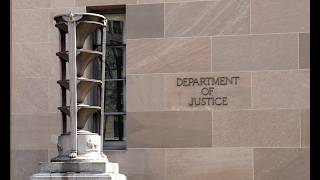
 Reference video
A video on the same topic from an external channel, separate from the reports analyzed here.
Supreme Court Upholds Birthright Citizenship
Court ruling sparks legislative and DOJ reactions.
Event Overview
The Supreme Court ruled 6-3 that President Trump's executive order ending birthright citizenship for children of unauthorized or temporarily authorized parents was unconstitutional. Chief Justice John Roberts wrote the majority opinion, while Justice Thomas issued a 91-page dissent. In response, the DOJ prioritized probes into 'birth tourism schemes,' and Senator Eric Schmitt announced plans for legislation and a constitutional amendment to restrict the practice.
Issue Summary
Bias Distribution
Bias Signal Summary
12 articles — 7 signal types detected.
Coverage Tone Distribution
· -Redder = higher bias. Larger area = more outlets. Click an outlet to jump to its position.
AI Analysis
Missing are the perspectives of constitutional scholars analyzing the legal precedents cited in the majority opinion and the lived experiences of families and children directly affected by the ruling. There is also a lack of neutral reporting on the specific mechanisms of the proposed legislation and constitutional amendment.
Related Coverage
Coverage flow
Coverage volume
Focus shift
Story timeline
Recommended Reads
Congress Plans To ‘Rein In’ Birth Tourism Scams After SCOTUS Ruling
Daily Caller
Trump’s Dubious Claim that Birthright Citizenship Could Still Be Overturned with Legislation - FactCheck.org
factcheck.org
On birthright citizenship, Supreme Court's Gorsuch has surprising take - USA Today
USA Today
SCOTUS Pasting Birth Tourism Into The Constitution Demands A Legal System Rebuild
The Federalist
Coverage across 11 outlets was deeply polarized: five focused on criticizing right-wing political actors and judicial weaponization, while the remaining six leaned right, with three framing citizenship laws as security threats and three urging aggressive legal action and strategic optimism.
The writer intends to frame birthright citizenship as a loophole being 'abused' by foreigners, portraying it as a financial and sovereign threat to the U.S. to make the reader view restrictive legislative changes as necessary and urgent.
The writer intends to frame Donald Trump's political stance on birthright citizenship as counterproductive and absurd by contrasting it with the tangible success of a celebrated national athlete.
The writer intends to convince the reader that the Supreme Court is a politically weaponized institution that uses selective 'moderate' rulings as a smokescreen for a radical right-wing agenda, thereby urging the reader to view the court as illegitimate and in need of systemic overhaul.
The writer intends to frame the DOJ's move as a retaliatory or alternative strategy by the Trump administration to circumvent a significant legal defeat at the Supreme Court.
The writer intends to frame a legal defeat for Trump as a strategic opportunity for Republicans by highlighting Justice Kavanaugh's 'roadmap,' thereby instilling a sense of hope and actionable direction for the reader regarding the restriction of birthright citizenship.
The writer intends to portray the administration's crackdown as a reactionary measure based on 'scant evidence' and 'limited evidence,' framing the effort as an attempt to bypass a Supreme Court ruling that rejected the administration's 'revisionist view' of the 14th Amendment.
The writer intends to highlight a nuanced and unexpected legal position held by Justice Gorsuch, suggesting that even among the conservative wing, there is hesitation regarding the total denial of citizenship to children of long-term undocumented residents.
The writer intends to portray Justice Kavanaugh's judicial approach as logically superior and 'tidy' compared to the rest of the Court, while suggesting the majority acted with 'unseemly over-eagerness' by ignoring a simpler statutory path to reach a constitutional ruling.
The writer intends to portray Ted Cruz as a hypocritical and opportunistic politician who abandons constitutional principles to pander to a xenophobic political base.
The writer intends to debunk Donald Trump's claim as legally unfounded, instilling in the reader the perception that the President is ignoring the Supreme Court's majority ruling and the consensus of legal experts.
Loading comments...