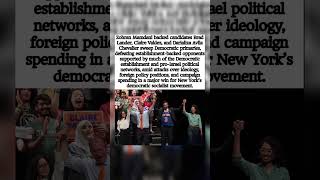
 Reference video
A video on the same topic from an external channel, separate from the reports analyzed here.
Democratic Socialists Win New York Primaries
Democratic Party faces internal rift over socialist rise.
Event Overview
Democratic socialists have won primaries in New York, including Zohran Mamdani winning the NYC mayoralty. This shift has led to internal Democratic Party conflict, with some calling for a party schism and others defending the wins as a catalyst for economic debate. Critics have linked the movement to foreign communist influence and anti-Americanism, while supporters view it as a structural shift driven by systemic frustration.
Issue Summary
Bias Distribution
Bias Signal Summary
10 articles — 7 signal types detected.
Coverage Tone Distribution
· -Redder = higher bias. Larger area = more outlets. Click an outlet to jump to its position.
AI Analysis
Missing are the perspectives of the voters who cast these ballots and the specific policy platforms of the winning candidates. There is also a lack of analysis regarding the practical governance challenges of implementing democratic socialist policies in New York City.
Related Coverage
Related Cards
Coverage flow
Coverage volume
Focus shift
Story timeline
Recommended Reads
Brad Lander says Democratic divide is not 'progressives vs. moderates' but 'fighters vs. folders'
NBC News
Will the Mamdani effect make 2028 the year of the leftwing president?
The Guardian
Sen. Chris Murphy says socialist wins prove Democratic Party ‘alive and growing’
Washington Examiner
Dems Aren’t Afraid Of The Communists Their Party Is Electing. They Just Hate Losing Their Jobs To Them
The Federalist
Coverage was split across several perspectives: four outlets analyzed internal party power shifts, while two framed the movement as a radical threat and another two critiqued Democratic leadership. Only one outlet presented the rise of socialism as a legitimate response to systemic frustration.
The writer intends to portray the Democratic Party as fractured, strategically adrift, and in a state of internal crisis following their 2024 losses.
The writer intends to portray Sen. Chris Murphy as evasive and contradictory, suggesting that his 'big tent' philosophy serves as a cover for the Democratic Party's drift toward radicalism and the inclusion of anti-American elements.
The writer intends to frame the rise of democratic socialism not as a fluke, but as a structural shift in American politics driven by genuine systemic frustration, suggesting that the Democratic establishment's failure to evolve has made a leftwing 2028 presidential bid likely.
The writer intends to present Brad Lander's perspective as a new way to understand Democratic party tensions, shifting the reader's perception from an ideological conflict (progressive vs. moderate) to a behavioral or tactical one (fighters vs. folders).
The writer intends to frame the victory as a significant power shift within the Democratic Party, prompting the reader to consider whether this 'insurgent' momentum can be replicated on a national scale.
The writer intends to frame Senator Murphy's lack of knowledge as a hypocritical failure of leadership, suggesting that Democrats are adopting the same avoidant tactics they criticize in Republicans.
The writer intends to portray the Democratic Party as being fractured by an extreme 'socialist' wing, suggesting that these internal divisions are alienating veteran strategists and creating electoral vulnerabilities for the party.
The writer intends to present the Democratic Party as being in the midst of an internal ideological struggle, framing the socialist wins as a catalyst for a debate between moderate capitalism and more ambitious economic agendas.
The writer intends to convince the reader that the Democratic Party is not a victim of an outside takeover, but is instead facing the internal consequences of its own deliberate strategy to empower communists, with the only real conflict being a struggle for job security among party elites.
The writer intends to frame the rise of the DSA in New York as a dangerous movement linked to foreign communist influence and radical anti-Americanism, intending to instill fear or distrust in the reader regarding these political figures.
Loading comments...