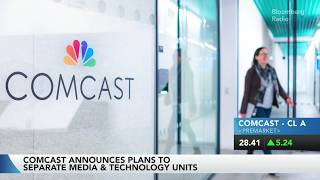
 Reference video
A video on the same topic from an external channel, separate from the reports analyzed here.
Comcast to Spin Off NBCUniversal and Sky
Major corporate restructuring to separate media and connectivity.
Event Overview
Comcast has announced plans to spin off NBCUniversal and Sky into an independent, publicly traded company. The new entity will include Universal Pictures, NBC, Telemundo, NBC News, Peacock, Bravo, theme parks, and Sky. Comcast will retain a 19.9% stake in the new company and pivot its focus toward broadcast, wireless services, and pay TV distribution. This move follows a previous spinoff of cable channels into a company called Versant.
Issue Summary
Bias Distribution
Bias Signal Summary
16 articles — 5 signal types detected.
Coverage Tone Distribution
· -Redder = higher bias. Larger area = more outlets. Click an outlet to jump to its position.
AI Analysis
Missing perspectives include the potential impact on employees and creative talent within the spun-off entity, as well as the viewpoint of consumers regarding service quality or pricing. There is also a lack of analysis concerning the competitive landscape for the newly independent media company.
Related Coverage
Coverage flow
Coverage volume
Focus shift
Story timeline
Recommended Reads
Comcast to Spin Off NBCUniversal in Major Corporate Shake-Up
Mediaite
NBCUniversal spin marks new era of Hollywood moguls - Los Angeles Times
LA Times
Comcast's NBCUniversal spinoff raises hope for more deals. There may not be good options
CNBC
What Comcast-NBCUniversal Split Faces On D.C.’s Trump-Influenced Regulatory Road - Deadline
Deadline
Coverage of the restructuring was split, with six outlets framing the move as a sign of decline or calculated consolidation, while five viewed the spinoff as a strategic step toward growth and shareholder value.
The writer intends to present the corporate restructuring as a strategic move for growth and efficiency, relying on company leadership's framing to instill a positive perception of the company's future trajectory in the reader.
The writer intends to frame the NBCUniversal spin-off as a symptom of the decline of the traditional 'Hollywood mogul' era, positioning Comcast as a vulnerable legacy player being eclipsed by Silicon Valley's financial and technological dominance.
The writer intends to inform the reader of a corporate restructuring event, presenting it as a straightforward business decision to separate media assets from wireless and broadcast operations.
The writer intends to present the corporate breakup as a strategic and necessary evolution for survival in a volatile media landscape, leading the reader to view the move as a logical response to industry decline rather than a sign of instability.
The writer intends to inform the reader of a major corporate restructuring at Comcast to encourage the reader to purchase a subscription to access the full details.
The writer intends to frame the corporate split not just as a structural change, but as a strategic repositioning to enable agility and potential M&A activity in a volatile media and telecom market.
The writer intends to present the corporate split as a strategic, positive evolution driven by market necessity, relying heavily on executive optimism to instill a sense of confidence and growth in the reader.
The writer intends to frame Comcast's move as a belated admission that the 'pipes + content' business model is a failure, while positioning the resulting standalone media assets as prime targets for big tech acquisition.
The writer intends to present the spinoff as a strategic response to the decline of traditional cable and the struggle for streaming profitability, while subtly suggesting that despite executive denials, the move makes the entity a prime target for acquisition.
The writer intends to present the spinoff as a strategic and market-validated move, leading the reader to perceive the corporate restructuring as a positive catalyst for shareholder value.
Loading comments...