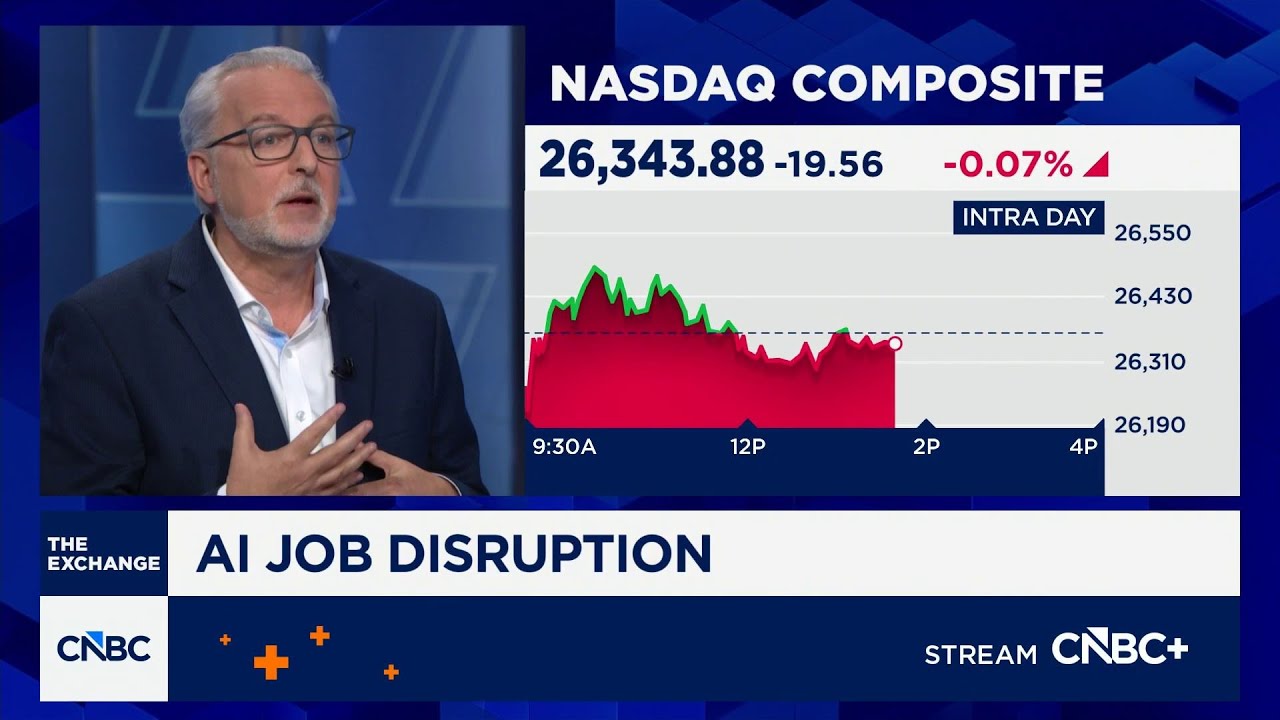
 Reference video
A video on the same topic from an external channel, separate from the reports analyzed here.
US Economy Sheds 23,000 Jobs in July
Weak jobs data pressures Federal Reserve rate decisions.
Event Overview
The US economy lost 23,000 jobs in July, missing economist expectations of growth. While the unemployment rate fell to 4.1%, this decline is attributed to a drop in labor force participation and discouraged workers leaving the workforce. This unexpected weakness has led investors to believe the Federal Reserve may hold interest rates steady, causing stock markets to rise.
Issue Summary
Bias Distribution
Bias Signal Summary
31 articles — 5 signal types detected.
Coverage Tone Distribution
· ConflictRedder = higher bias. Larger area = more outlets. Click an outlet to jump to its position.
AI Analysis
The unexpected job losses in July and the decline in labor force participation are highlighted across 4 of 5 articles, showing a pattern of focusing on labor market weakness, which characterizes the coverage as primarily centered on negative employment indicators. A paradoxical relationship between weakening employment and rising stock markets or improved financing conditions is noted in 2 of 5 articles, reflecting a pattern of analyzing market reactions, which characterizes the coverage as linking economic strain to investor optimism. Only 1 outlet discusses the role of immigration in the labor market transition, revealing a pattern of omitting demographic drivers of employment shifts, which represents a substantial missing perspective regarding the structural causes of the payroll contraction.
Critical coverage dominates with mid-to-high bias intensity.
Related Coverage
Coverage flow
Coverage volume
Focus shift
Story timeline
Recommended Reads
U.S. economy lost 23,000 jobs in July, new report shows
CBS News
U.S. employers unexpectedly cut 23,000 jobs amid strain from the Iran war, unemployment dips to 4.1%
PBS
What Trump Will Want To See in Friday’s Jobs Report
Newsweek
The July jobs numbers are due out Friday. Here's what to expect - CNBC
CNBC
Of the 16 outlets analyzed, 10 focused on the negative implications of the data, with six warning of deep economic stagnation and four framing it as a political failure of credibility. The remaining outlets highlighted the Federal Reserve's policy dilemma (3), offered nuanced data analysis (2), or viewed job losses as a positive transition (1).
The writer intends to convey a direct causal link between poor economic data and positive stock market movement, instilling the perception that economic weakness is a catalyst for investor optimism regarding interest rates.
The writer intends to convey that the U.S. economy is entering a precarious state where the Federal Reserve must balance fighting inflation against a suddenly 'wobbly' labor market.
The writer intends to present a nuanced view of a negative employment report, balancing the raw data of job losses with expert opinions that suggest the decline is seasonal and not necessarily a sign of economic collapse.
The writer intends to convey that a weakening labor market is being interpreted by financial markets as a signal for the Federal Reserve to pause rate hikes, thereby driving stock prices up.
The writer intends to convey that the U.S. labor market is significantly weaker than previously thought, framing the slight drop in unemployment as a deceptive metric caused by people leaving the workforce rather than job growth.
The writer intends to convey that the current labor market is deceptive; while the unemployment rate looks low, the underlying health of the economy is deteriorating, creating a precarious situation for new job seekers and a political liability for the administration.
The writer intends to convey that the US labor market is significantly weaker than previously thought, creating a precarious economic situation that complicates the Federal Reserve's inflation strategy and provides political ammunition for the opposition.
The writer intends to instill a sense of economic instability and concern in the reader by framing the job market as 'wilting' and 'stalled,' emphasizing that the dip in unemployment is a deceptive metric caused by workforce attrition rather than job growth.
The writer intends to frame the unexpected job losses not as a crisis, but as a sign of a transitioning economy that is becoming less dependent on immigration, thereby suggesting that current low growth is actually 'healthy' or 'robust'.
The writer intends to instill a sense of economic apprehension in the reader by framing the decline in service-sector employment as a 'foreboding' sign of broader economic instability driven by inflation and stagnant wages.
🌏 Global Comparison
How Korean and US outlets report the same event differently, and propagation delay
Loading comments...