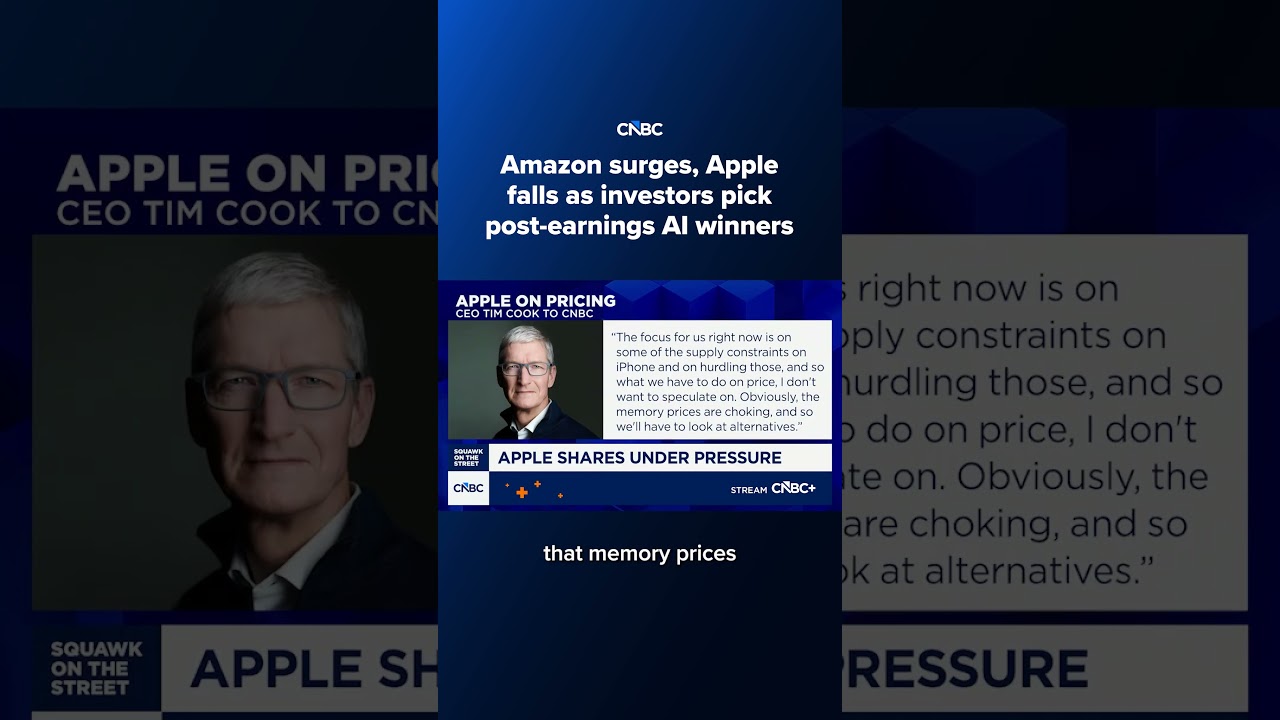
 Reference video
A video on the same topic from an external channel, separate from the reports analyzed here.
Apple Reports Fiscal Third Quarter Earnings
Strong earnings are offset by supply chain and AI risks.
Event Overview
Apple reported fiscal third quarter earnings and revenue that exceeded analyst expectations, driven by record iPhone sales. Despite the beat, the company's stock price dropped between 6% and 10% due to weak fourth-quarter guidance and warnings of a global memory shortage. Additionally, CEO Tim Cook announced that John Ternus will succeed him as CEO on September 1.
Issue Summary
Bias Distribution
Bias Signal Summary
11 articles — 5 signal types detected.
Coverage Tone Distribution
· ConflictRedder = higher bias. Larger area = more outlets. Click an outlet to jump to its position.
AI Analysis
All 3 articles focus on financial beats, stock volatility, and leadership changes, showing a pattern of prioritizing immediate market reactions and corporate governance over long-term product strategy. Only 1 outlet highlights the strategic communication campaign surrounding the CEO transition, indicating a narrow focus on the perception of leadership stability. None of the 7 articles address the specific impact of the global memory shortage on consumer pricing or product availability, representing a substantial missing perspective regarding the supply chain crisis.
Critical coverage dominates with mid-level bias intensity.
Related Coverage
Coverage flow
Coverage volume
Focus shift
Story timeline
Recommended Reads
Apple stock slides nearly 10% as Cook warns of memory shortage impact - Yahoo Finance
finance.yahoo.com
Apple’s Worst Day Since March 2020: A ‘100-Year Flood’ - Apple (NASDAQ:AAPL), SAMSUNG ELECT LTD by Samsun - Benzinga
benzinga.com
Apple's Record Quarter Ran Into A Memory Bill
trefis.com
Tim Cook praises John Ternus again in Apple's Q3 2026 earnings call - Mashable
mashable.com
Two of the four outlets focused critically on financial risks and AI lag, while the remaining two were split between neutral reporting of market data and a supportive view of Apple's strategic leadership.
The writer intends to convey that despite Apple's strong financial performance, systemic supply chain vulnerabilities and rising component costs pose a significant threat to future profitability and growth.
The writer intends to convey that Apple is entering a period of increased financial vulnerability due to structural supply chain issues and a lack of strategic AI direction, leading the reader to perceive the current stock price as overvalued or risky.
The writer intends to provide a rapid, factual snapshot of market movements and specific earnings beats to keep the reader informed of immediate financial trends.
The writer intends to inform investors that Apple's current valuation is disconnected from its near-term growth prospects and supply chain risks, instilling a sense of caution regarding the stock's immediate performance.
The writer intends to convey that Apple's current financial success is secondary to its future risks, specifically supply chain instability and a perceived lag in AI innovation, leading the reader to view the 'earnings beat' as a distraction from deeper systemic concerns.
The writer intends to convey that Apple is meticulously managing the perception of its leadership transition to project stability and continuity, ensuring investors and the public view Ternus as a seamless extension of Cook.
The writer intends to inform investors that despite strong iPhone sales, Apple is facing systemic headwinds in China, services growth, and supply chain costs that make its current stock valuation precarious.
The writer intends to convey that Apple's stock decline is not a result of poor demand or business failure, but rather an external supply-chain crisis in the memory market that the company cannot control.
The writer intends to convey a sense of volatility and instability surrounding Apple's immediate future, contrasting its current struggles with the success of competitors like Amazon to highlight a shift in investor sentiment.
The writer intends to frame Tim Cook's legacy as being challenged by a crisis he cannot solve, instilling a sense of vulnerability and irony regarding Apple's current operational stability.
Loading comments...