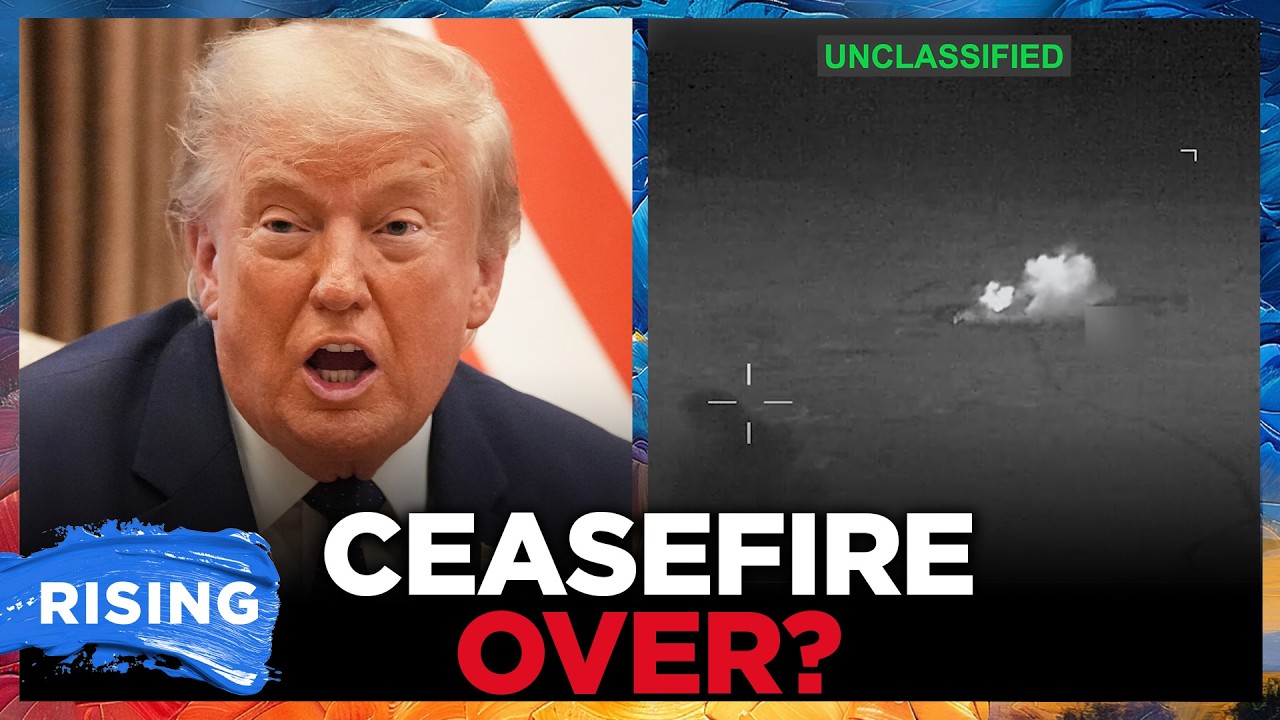
 Reference video
Reference video may not be directly related to the topic of this article
US and Iran Exchange Military Strikes and End Ceasefire
Military escalation threatens global oil transit and markets.
Event Overview
The U.S. launched retaliatory airstrikes against Iranian radar, missiles, and air defense targets after Iran attacked three commercial ships in the Strait of Hormuz. President Trump declared the ceasefire and interim deal with Iran over, citing Iranian aggression and personal assassination threats. Iran has vowed to retaliate by attacking two targets for every one hit by the U.S. and has threatened to close the Strait of Hormuz.
Issue Summary
Bias Distribution
Bias Signal Summary
20 articles — 6 signal types detected.
Coverage Tone Distribution
· -Redder = higher bias. Larger area = more outlets. Click an outlet to jump to its position.
AI Analysis
Missing are the perspectives of the commercial shipping industry regarding economic disruption and the official diplomatic or strategic justifications provided by the Iranian government.
Related Coverage
Related Cards
Coverage flow
Coverage volume
Focus shift
Story timeline
Recommended Reads
What are Trump’s options now that he’s said the ceasefire is over?
Washington Examiner
Iran Live Updates: Trump Suggests Cease-Fire Is 'Over' After Latest Strikes - The New York Times
New York Times
‘We May Sleepwalk Our Way Back to War’
theatlantic.com
US military launches fresh strikes on Iran – Middle East crisis live
The Guardian
Out of 15 outlets, 11 focused on the negative implications of the situation, with six criticizing Trump's leadership as incompetent and reckless, five analyzing systemic geopolitical instability, and one highlighting the human cost. Conversely, three outlets framed Iran as the aggressor and viewed the U.S. response as necessary.
The writer intends to present Trump's actions as a calibrated response to Iranian provocation, framing the current military activity as a strategic 'controlled escalation' rather than an uncontrolled slide into total war.
The writer intends to portray Joe Rogan as an inconsistent critic of Donald Trump, highlighting the tension between Rogan's personal friendship with the president and his public condemnation of Trump's military actions.
The writer intends to present the military escalation as a volatile cycle of aggression and retaliation, while humanizing the impact on Iranian civilians to evoke sympathy and highlight the human cost of geopolitical decisions.
The writer intends to portray the collapse of the cease-fire as an inevitable result of President Trump's superficial diplomacy and 'bravado,' leading the reader to perceive the administration's Middle East strategy as a failure.
The writer intends to frame the military escalation as a result of President Trump's inconsistent communication, suggesting that the strikes are linked to his 'mixed messaging' and unpredictable stance on the ceasefire.
The writer intends to provide a brief, urgent update on escalating military tensions, positioning the U.S. actions as a direct response to Iranian aggression.
The writer intends to link geopolitical instability and the end of a ceasefire directly to immediate negative market reactions, instilling a sense of volatility and risk in the reader.
The writer intends to portray the collapse of the U.S.-Iran ceasefire as an inevitable result of Iranian aggression and Trump's personal disillusionment with Iranian leadership, framing the U.S. military action as a necessary act of accountability.
The writer intends to portray Donald Trump as an incompetent and incoherent leader who is being outmaneuvered by Iran. The goal is to instill a perception of the US administration as strategically bankrupt and the president as mentally and professionally unfit for wartime leadership.
The writer intends to frame Trump's military strategy as reckless and potentially illegal, instilling in the reader a sense of alarm regarding the risk of war crimes and the failure of diplomatic efforts.
Loading comments...