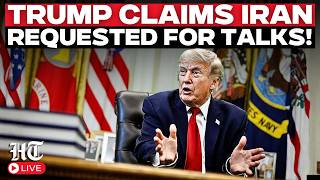
 Reference video
Reference video may not be directly related to the topic of this article
Iran Holds Funeral for Ayatollah Ali Khamenei
Death of Iran's leader triggers regional instability.
Event Overview
Supreme Leader Ayatollah Ali Khamenei was killed in U.S. and Israeli airstrikes, with one report specifically citing a February 28 strike called Operation Epic Fury. Iran organized a multi-day funeral procession moving from Tehran to other cities, including Qom and Mashhad, with officials aiming for millions of attendees to project strength. While public mourning occurred, the absence of successor Mojtaba Khamenei has led to speculation regarding his health and leadership status.
Issue Summary
Bias Distribution
Bias Signal Summary
55 articles — 7 signal types detected.
Coverage Tone Distribution
· -Redder = higher bias. Larger area = more outlets. Click an outlet to jump to its position.
AI Analysis
Missing are the perspectives of the Iranian general public regarding the leadership transition and the official diplomatic responses from global allies or neutral nations. There is also a lack of analysis from military experts regarding the strategic implications of "Operation Epic Fury."
Related Coverage
Related Cards
Coverage flow
Coverage volume
Focus shift
Story timeline
Recommended Reads
Inside Tehran as funeral for late Iranian supreme leader
NBC News
Live updates: Whereabouts of Iran’s new supreme leader unknown as public mourning of Khamenei continues - CNN
CNN
Live updates: Trump and Iran issue conflicting statements about new talks - CNN
edition.cnn.com
Iran War Gives 'Switzerland of Middle East' Key Say in Fate of Hormuz
Newsweek
Of the 18 outlets analyzed, nine viewed the funeral as a calculated political performance by a weakened regime, while five expressed skepticism toward diplomatic efforts and four emphasized U.S. strength against Iranian terrorism.
The writer intends to convey that the path to a U.S.-Iran peace deal is fraught with contradictions and structural obstacles, leaving the reader with a sense of fragility and skepticism regarding the possibility of a stable resolution.
The writer intends to convey a sense of diplomatic stalemate, suggesting that while the US is taking the initiative to seek peace, the gap between the two parties remains significant.
The writer intends to provide a rapid, high-level overview of diverse global headlines to keep the reader informed of current events across different sectors.
The writer intends to inform the reader that a significant diplomatic event (peace talks) has been interrupted by a major leadership transition/funeral in Iran, suggesting a temporary freeze in diplomatic momentum.
The writer intends to frame the funeral not as a genuine moment of national mourning, but as a calculated political performance by an authoritarian regime attempting to mask internal fragility, economic failure, and leadership uncertainty.
The writer intends to portray the funeral not merely as a mourning period, but as a calculated political tool used by the Iranian theocracy to project strength, maintain internal control, and signal defiance to the U.S. and Israel during a volatile transition of power.
The writer intends to frame the Iranian regime as an aggressive and hypocritical entity that uses a funeral to issue threats and consolidate alliances with 'anti-hegemony' states while excluding the West.
The writer intends to frame the funeral not as a genuine act of mourning, but as a desperate propaganda effort by a weakened regime to project strength and mask its international isolation and the violent nature of its leader's death.
The writer intends to frame the US-Iran MOU as a strategic success that has stabilized the global economy and lowered energy costs, positioning the administration's approach as pragmatic compared to the 'blind' aggression of its critics.
The writer intends to portray the current diplomatic efforts as fragile and contradictory, highlighting the gap between Trump's public claims and the official denials from Iran and Qatar.
Loading comments...