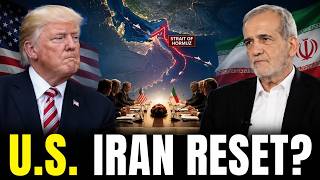
 Reference video
Reference video may not be directly related to the topic of this article
US and Iran Conflict Over Ceasefire and Maritime Control
Tensions rise over ceasefire violations and trade routes.
Event Overview
President Trump has accused Iran of violating a ceasefire, leading to U.S. military strikes described as a response to Iranian aggression. Simultaneously, Iran is attempting to control traffic in the Strait of Hormuz, with the IRGC warning shipowners against unauthorized routes. While the U.S. frames its actions as protecting international law, Iranian official Ghalibaf has scoffed at Trump's claims.
Issue Summary
Bias Distribution
Bias Signal Summary
34 articles — 8 signal types detected.
Coverage Tone Distribution
· -Redder = higher bias. Larger area = more outlets. Click an outlet to jump to its position.
AI Analysis
Missing perspectives include the viewpoints of neutral international bodies or allies regarding the legality of the strikes, as well as the humanitarian impact on civilians in the affected regions. Additionally, there is no coverage of the economic consequences for global shipping and energy markets.
Related Coverage
관련카드
Coverage flow
Coverage volume
Focus shift
사건 전개
Recommended Reads
Rubio warns Iran off Strait of Hormuz toll ‘fantasy’ after Trump wins Senate war powers reversal
NY Post
Why Is Iran Still Attacking Ships in the Strait of Hormuz?
Newsweek
UN agency pauses evacuation of ships through the Strait of Hormuz after attack on vessel - NPR
NPR
Exclusive | Iran Estimates $40 Billion Windfall From Reopening Hormuz With Gulf States - WSJ
WSJ
Eight of the 17 outlets focused on regional volatility and the risk of diplomatic collapse, while six emphasized the necessity of U.S. military strength. The remaining three outlets analyzed Iran's geopolitical leverage or criticized U.S. policy as a strategic failure.
The writer intends to convey a sense of precariousness and volatility in the region, illustrating how a single military action (the drone strike) can derail international diplomatic and economic efforts to stabilize a vital global chokepoint.
The writer intends to portray Iran as an aggressive actor attempting to unilaterally seize control of an international waterway through violence and financial extortion, thereby framing the U.S. position as a necessary defense of global maritime freedom.
The writer intends to frame the U.S. position as dominant and the Iranian regime as unreliable and provocative, encouraging the reader to view Trump's 'strength-based' diplomacy as the effective driver of the current negotiations.
The writer intends to frame Iran as an obstructive force attempting to exert unilateral control over a global trade route through threats and intimidation, contrasting this with the U.S. and IMO's efforts to maintain international law and free navigation.
The writer intends to frame the US military action as a reactive and justified response to a breach of a ceasefire by Iran, while highlighting the fragility of current diplomatic negotiations.
The writer intends to present the U.S. military action as a direct and justified response to Iranian aggression and a breach of a diplomatic agreement, framing the U.S. as the retaliating party rather than the aggressor.
The writer intends to frame Iran's proposal as a strategic move to gain financial windfall and geopolitical control over a critical global oil artery, positioning the regime as an opportunistic actor seeking to monetize a waterway it previously disrupted.
The writer intends to convey that the fragile peace process between the US and Iran is under threat due to disputes over strategic control and economic leverage in the Strait of Hormuz, leaving the reader with a sense of uncertainty regarding the permanence of the agreement.
The writer intends to present the situation as a precarious 'test' of a fragile ceasefire, framing the US actions as a calibrated response to a provocation while highlighting the contradictory interpretations of the ceasefire by both nations.
The writer intends to portray Iran as an aggressor that is actively undermining international efforts (led by the U.N. and Oman) to maintain maritime traffic and bypass a blockade.
Loading comments...