Reference video may not be directly related to the topic of this article
Pete Hegseth Testifies Before Senate Appropriations Committee
U.S. seeks billions in funding for the war in Iran.
Event Overview
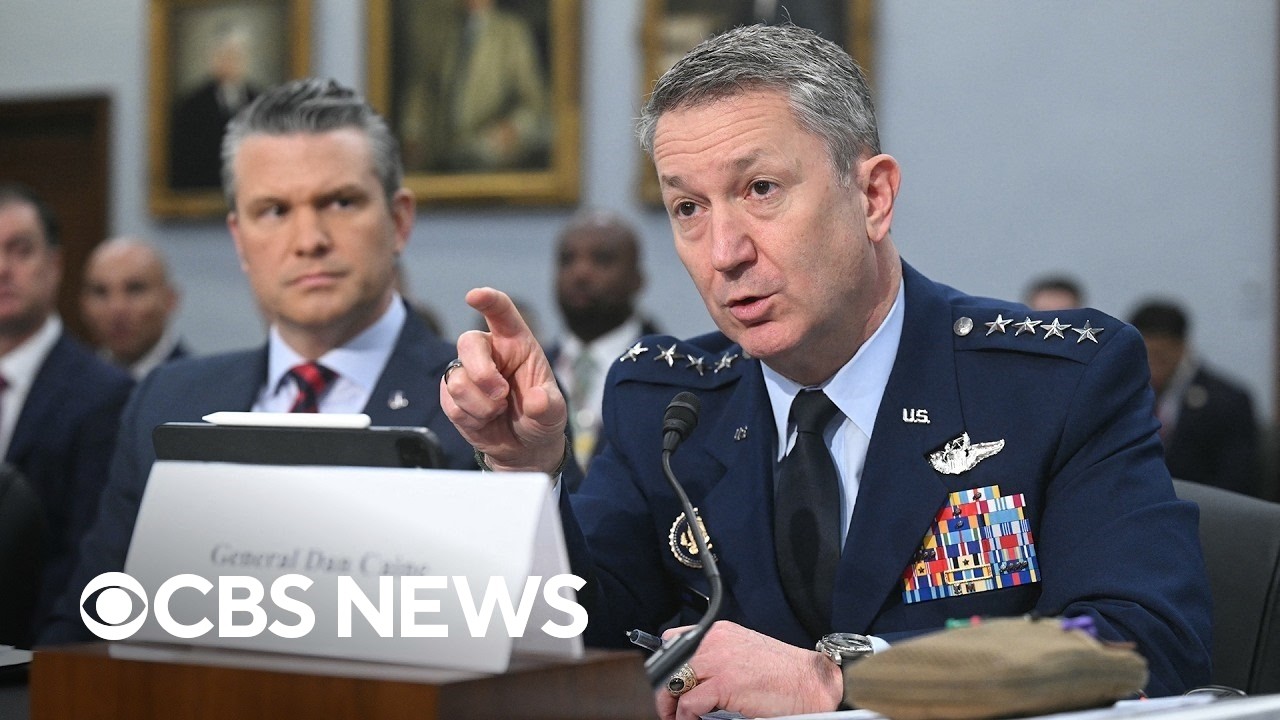
Defense Secretary Pete Hegseth testified before the Senate Appropriations Committee on Tuesday, July 21, regarding the costs and funding of the war with Iran. Hegseth stated the conflict has cost $37.5 billion since February and requested supplemental funding, with figures cited between $87 billion and $95 billion. The hearing featured heated exchanges between Hegseth and Democratic senators over the war's strategy, transparency, and legality. Other attendees included Joint Chiefs of Staff Chairman Dan Caine and Agriculture Secretary Brooke Rollins.
Issue Summary
Bias Distribution
Low 2Mid 10High 2V.High 1
15 outlets·US News
The Divergence Score measures how far each outlet's coverage deviates from the factual baseline on a scale of 0.0 to 1.0. It combines three dimensions: editorial bias, information transparency, and headline-body consistency. Scores closer to 0 indicate coverage faithful to the baseline; scores closer to 1 indicate reporting skewed toward a particular perspective.
Redder = higher bias. Larger area = more outlets. Click an outlet to jump to its position.
Stance Alignment measures whether outlets take the same direction (supportive or critical) toward a specific target — a person, policy, or organization. It is separate from the Divergence Score, which measures the intensity of bias. "Aligned" means all outlets lean the same way; "Conflict" means they are split.
deceptive rule: Portrayal of administration as deceptive, incompetent, or discredited (4)
political friction: Emphasis on political conflict, opacity, and institutional friction (7)
assertive lead: Portrayal of administration as assertive, active, and effective (2)
AI Analysis
All 3 articles focus on the interaction between Pete Hegseth and the Senate, showing a pattern of centering the event on personality and political conflict, which characterizes the coverage as focused on political theater rather than policy. 2 of 3 articles highlight the friction between Hegseth and Democratic senators, establishing a pattern of emphasizing partisan hostility, which describes the coverage as a clash of political identities. Only 1 outlet mentions the specific funding figures of $87 billion to $95 billion, revealing a pattern of omitting the detailed financial scale of the request, which represents a substantial missing perspective regarding the economic impact of the war.
The coverage is sharply divided with mid-to-high intensity bias.
Related Coverage
Currently viewing
Pete Hegseth Testifies Before Senate Appropriations Committee
Out of 13 outlets, seven emphasized political conflict and institutional friction, while four portrayed the administration as deceptive or incompetent, leaving only two that depicted the administration as assertive and effective.
CBS News
2026.07.22 19:49 ET
0.41High
The writer intends to inform the reader of the ongoing nature of the military conflict and the associated financial requests from the Pentagon, framing the situation as a sustained operation.
Bias 0.1 ⓘTransparency 0.3 ⓘ
Title match:Accurateⓘ
Clarity 5/5
Context 1/5
Balance 1/5
Originality 1/5
ArguesThe U.S. is engaged in a prolonged military campaign against Iran that requires additional Pentagon funding.
Bias signals
Fact Omission
The text mentions strikes on Iran but omits any context regarding the cause of the strikes or Iran's response.
Balance
Only the U.S. perspective/action is mentioned; no statement or reaction from Iran is included.
theatlantic.com
2026.07.22 19:49 ET
0.40Moderate
The writer intends to portray the Trump administration as deceptive and strategically incompetent, leading the reader to believe the U.S. is trapped in an avoidable, costly, and failing 'forever war' that is being hidden from the public and Congress.
Bias 0.5 ⓘTransparency 0.4 ⓘ
Title match:Accurateⓘ
Clarity 4/5
Context 4/5
Balance 2/5
Originality 4/5
ArguesThe Trump administration is dangerously waging an undeclared war against Iran without a clear strategy, international support, or public accountability, creating a strategic trap for the United States.
OmitsThe administration's claim that the U.S. is 'winning big' and that the military operations are necessary and successful.
Unique Angle
Provides specific details on the naming of the conflict (Operation Epic Fury), internal military frustrations via anonymous sources, and specific funding requests ($67.1 billion) not publicly linked to Iran by the administration.
The writer uses subjective labels like 'blustery insistence' and 'trap of our own making' to characterize the administration's actions. The framing focuses entirely on the lack of transparency and strategic failure, omitting any potential intelligence justifications for the strikes.
Balance
Only one side's strategic perspective is detailed; the administration's goals are presented as 'apparent' or 'hope' rather than stated policy. The administration's claims of winning are immediately countered by the writer's assertions that they are 'hard to square with the record'. Opposing views (Trump's claims) are presented as 'blustery insistence' rather than legitimate arguments.
BBC
2026.07.22 19:49 ET
0.29Moderate
The writer intends to portray the funding request as a point of intense political conflict, highlighting the tension between the administration's 'peace through strength' narrative and Democratic concerns over 'forever wars' and financial transparency.
Bias 0.0 ⓘTransparency 0.5 ⓘ
Title match:Accurateⓘ
Clarity 4/5
Context 4/5
Balance 4/5
Originality 3/5
ArguesThe US administration's request for massive military funding for the Iran war is meeting significant political resistance and skepticism regarding the actual financial and human costs of the conflict.
OmitsThe argument that the funding is a 'generational investment' necessary to avoid 'playing catch-up' with other nations and to ensure military lethality.
Unique Angle
The article provides specific figures on the funding request ($87bn total, $67bn for Middle East) and includes a specific counter-claim regarding the underestimation of war costs via CBS sources.
Target
Trump administration's military funding request
Bias signals
Selective Emphasis
The article emphasizes the 'shouting match' and 'Trump derangement syndrome' comment to highlight the volatility of the hearing.
Balance
Both the administration's justification (lethality, peace through strength) and the opposition's arguments (forever war, cost of living) are presented. The article includes a counter-perspective on the financial figures provided by the government via external sources.
NBC News
2026.07.22 19:49 ET
0.38Moderate
The writer intends to portray the Trump administration's management of the Iran war as contradictory and financially opaque, highlighting the gap between official public estimates, internal costs, and the President's claims of victory.
Bias 0.1 ⓘTransparency 0.3 ⓘ
Title match:Accurateⓘ
Clarity 4/5
Context 4/5
Balance 3/5
Originality 4/5
ArguesThe Trump administration is requesting massive additional funding for a war that it simultaneously claims to have won, while providing cost estimates that conflict with its own internal data.
OmitsThe view that the military operations in Iran have been an 'incredible effort' that has left the adversary in its worst state ever.
Unique Angle
The article provides a specific discrepancy between the public testimony of the Defense Secretary and internal Pentagon figures obtained by NBC News via three U.S. officials.
Target
Trump administration
Bias signals
Selective EmphasisFraming Bias
The writer emphasizes the 'awkward position' of Hegseth and contrasts his request for money with Trump's claims of victory to frame the administration as contradictory. The article highlights the discrepancy between public and internal cost figures to suggest a lack of transparency.
Balance
Includes direct quotes from both the critical Senator (Peters) and the defending Secretary (Hegseth) Presents the administration's justification for the funding (payroll, maintenance, and anticipated costs)
pbs.org
2026.07.22 19:49 ET
0.34Moderate
The writer intends to portray a tension between legislative demands for clarity and military officials' reluctance to provide definitive predictions on geopolitical risks, leaving the reader with a sense of uncertainty regarding the strategy in Iran.
Bias 0.1 ⓘTransparency 0.3 ⓘ
Title match:Accurateⓘ
Clarity 4/5
Context 3/5
Balance 2/5
Originality 1/5
ArguesMilitary officials are avoiding direct answers to critical questions about the risks of U.S. withdrawal from Iran during a high-stakes funding hearing.
OmitsThe perspective that military officials are correctly avoiding 'political calculations' and hypothetical scenarios to maintain professional neutrality.
Target
military officials (Caine and Hegseth)
Bias signals
LabelingSelective Emphasis
The writer uses labels like 'didn't satisfy the senator's desire' and 'didn't directly answer' to frame the officials' responses as evasive.
Balance
Only one side of the exchange is framed as seeking 'straight talk' while the other is framed as 'demurring' or failing to satisfy. The officials' reasoning (that the questions were hypothetical/political) is mentioned but not expanded upon.
mediaite.com
2026.07.23 05:41 ET
0.52High
The writer intends to portray CNN's coverage as a decisive victory over Hegseth, framing the network's use of evidence as an effective 'demolition' of the Secretary's credibility.
Bias 0.4 ⓘTransparency 0.4 ⓘ
Title match:Accurateⓘ
Clarity 4/5
Context 2/5
Balance 2/5
Originality 1/5
ArguesCNN successfully exposed Pete Hegseth's inconsistency and hypocrisy regarding national security and military readiness.
OmitsThe perspective that Hegseth's statements are consistent or that the current military shortfalls are solely the fault of the previous administration.
Target
Pete Hegseth
Bias signals
Emotional ToneLabelingSubjective Judgment
The writer uses highly charged language such as 'Demolishes' in the title and 'pulled no punches' in the body to describe the reporting.
Balance
Only one side's critique is presented Hegseth's defense (blaming Biden) is included but framed as a deflection by the anchor
Fox News
2026.07.23 05:41 ET
0.58Very High
The writer intends to frame Hegseth as a strong, assertive leader who successfully deflects Democratic criticism by pivoting to accusations of partisan obstruction and past administrative failure.
Bias 0.5 ⓘTransparency 0.2 ⓘ
Title match:Accurateⓘ
Clarity 3/5
Context 3/5
Balance 2/5
Originality 2/5
ArguesPete Hegseth effectively countered Democratic questioning on the Iran war by highlighting Democratic funding failures and the Biden administration's perceived incompetence.
OmitsThe argument that the current administration lacks a viable strategy to win the war with Iran and has left the country in a worse position.
The writer uses the phrase 'turns tables' and 'blasted' to frame the interaction as a victory for Hegseth; includes the derogatory term 'Trump derangement syndrome' without critical distance; emphasizes the 'staggering' neglect of the previous administration.
Balance
Only one Democratic senator is quoted, while Hegseth's rebuttals are given extensive space and emotional weight The article uses loaded language to describe Hegseth's actions ('blasted', 'fired back', 'turns tables') while framing the Democratic position as 'skepticism'
AP News
2026.07.23 14:24 ET
0.30Moderate
The writer intends to portray the administration's war effort as unstable and poorly managed, emphasizing the disconnect between the White House's optimistic claims and the reality of rising costs, casualties, and legislative friction.
Bias 0.1 ⓘTransparency 0.5 ⓘ
Title match:Accurateⓘ
Clarity 4/5
Context 4/5
Balance 3/5
Originality 2/5
ArguesThe U.S. war with Iran is spiraling into a costly, strategy-less conflict that the administration is attempting to fund despite significant casualties, public disapproval, and internal leadership failures.
OmitsThe war is a necessary 'generational investment' with a resolution near, requiring urgent funding to avoid critical military shortfalls.
Unique Angle
Provides specific financial figures ($37.5 billion war cost, $95 billion request) and details the specific legislative mechanism (reconciliation) being used to push the budget through.
Target
The Trump administration's Iran war strategy
Bias signals
Selective EmphasisEmotional Tone
The article emphasizes the 'fiery' and 'combative' nature of the hearing and highlights the 'torrent of questions' and 'eruptions' to frame the administration as under siege. It selectively emphasizes negative indicators such as 'gas prices have spiked' and 'munitions are running low' to support the narrative of failure.
Balance
Includes quotes from both Democratic critics and Republican defenders Mentions Republican concerns (Sen. Collins) regarding Pentagon leadership Presents the administration's justification for the funding
theatlantic.com
2026.07.23 15:09 ET
0.40Moderate
The writer intends to portray Pete Hegseth as an unqualified, immature leader whose 'arrested development' and disregard for military protocol pose a systemic risk to the professionalism and safety of the U.S. armed forces.
Bias 0.4 ⓘTransparency 0.5 ⓘ
Title match:Accurateⓘ
Clarity 4/5
Context 3/5
Balance 2/5
Originality 4/5
ArguesPete Hegseth's leadership is characterized by a dangerous 'captain's mentality' that prioritizes performative rebellion and junior-level concerns over strategic governance and the essential military culture of discipline.
OmitsThe view that Hegseth is a necessary disruptor bringing generational change and removing stagnant status quo elements from the Department of Defense.
Unique Angle
Provides specific examples of Hegseth's interventions in military disciplinary actions (flyovers) and quotes from former military officers regarding the internal perception of his leadership style.
Target
Pete Hegseth
Bias signals
LabelingFraming BiasSubjective Judgment
The author uses the 'Top Gun' analogy as a framing device to label Hegseth as having 'arrested development' and describes his actions as 'petty' and 'cheesy panache'.
Balance
Includes a statement from the Pentagon spokesperson defending Hegseth Mentions Hegseth's efforts to reform the acquisition process and adopt AI Relies heavily on anonymous or 'former' military officials to provide critical perspectives
pbs.org
2026.07.26 03:55 ET
0.34Moderate
The writer intends to portray the Trump administration's war effort as an escalating, costly conflict lacking transparency and strategic clarity, while framing the GOP's legislative approach as an attempt to bypass democratic consensus via reconciliation.
Bias 0.1 ⓘTransparency 0.5 ⓘ
Title match:Accurateⓘ
Clarity 4/5
Context 4/5
Balance 3/5
Originality 2/5
ArguesThe Trump administration is pursuing an expensive and spiraling conflict with Iran while avoiding accountability and ignoring public disapproval.
OmitsThe war is a necessary 'generational investment' and a strategic requirement to prevent critical military shortfalls.
Unique Angle
The article provides specific budgetary figures ($95 billion package, $37.5 billion war cost) and details the internal GOP tension regarding spending offsets and the use of the reconciliation process.
Target
Trump administration's Iran strategy
Bias signals
Selective EmphasisLabeling
The writer emphasizes the 'spiraling' nature of the war and the 'torrent of questions' facing Hegseth, while labeling the conflict as a potential 'forever war' by quoting a critic.
Balance
Includes quotes from both Democratic critics and Republican defenders Mentions Republican Senator Susan Collins' criticism of the Pentagon Presents the administration's justification for the funding as 'urgent' and 'necessary'
 Reference video