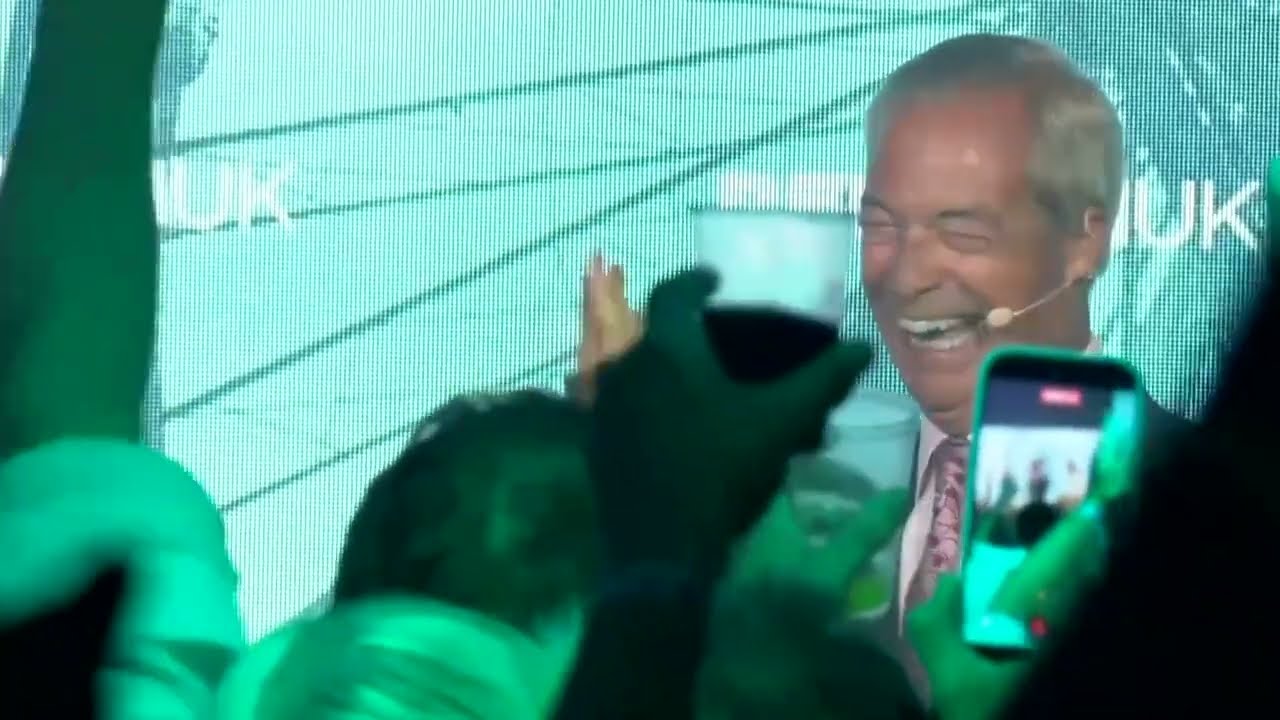
 Reference video
A video on the same topic from an external channel, separate from the reports analyzed here.
Nigel Farage Wins Clacton By-election
Farage returns to Parliament amid financial investigations.
Event Overview
Nigel Farage, leader of Reform UK, won a by-election in Clacton after resigning his seat to seek a renewed mandate. He secured approximately 63% of the vote, defeating satirical candidate Count Binface and a record field of candidates. Major political parties, including Labour and the Conservatives, boycotted the contest. Farage's return to Parliament resumes a parliamentary standards investigation into his financial affairs.
Issue Summary
Bias Distribution
Bias Signal Summary
11 articles — 6 signal types detected.
Coverage Tone Distribution
· ConflictRedder = higher bias. Larger area = more outlets. Click an outlet to jump to its position.
AI Analysis
Across 4 articles, the focus on Farage's mandate varies from a strategic gamble to a populist triumph, showing a pattern of polarized framing regarding the legitimacy of his victory. In 2 of 4 articles, the narrative emphasizes ethical breaches and contradictions in Farage's claims, reflecting a critical coverage characteristic. However, only 1 outlet mentions the specific details of the parliamentary standards investigation into his financial affairs, revealing a substantial missing perspective regarding the legal implications of his return to Parliament.
Critical coverage dominates with high to very high bias intensity.
Related Coverage
Coverage flow
Coverage volume
Focus shift
Story timeline
Recommended Reads
Trump ally Nigel Farage wins special election to return to UK parliament
CNBC
Nigel Farage claims he has won Clacton by-election 'overwhelmingly' - votes still being counted - BBC
BBC
Reform UK's Nigel Farage beats a slate of fringe candidates in election boycotted by major parties
PBS
Nigel Farage says he won’t attend count in Clacton byelection against Count Binface - UK politics live
The Guardian
Five of the eight outlets framed the victory as a hollow farce marred by legal and financial scandals, while the remaining three outlets offered diverging views, characterizing it as either a strategic validation, a populist triumph, or a premature claim.
The writer intends to frame Farage's victory as legally and ethically tainted by financial scandals, while simultaneously portraying the election process itself as a farce due to the boycott by mainstream parties.
The writer intends to portray Nigel Farage as a self-important figure who treats politics as a 'vanity parade' and avoids official scrutiny and public accountability in favor of curated, ticketed events.
The writer intends to portray Nigel Farage as premature and potentially dishonest by contrasting his claims of victory and safety threats with the actual status of the count and official police statements.
The writer intends to frame Farage's victory as hollow and opportunistic, emphasizing that he ran functionally unopposed while using the result to deflect from serious allegations of financial misconduct.
The writer intends to frame Farage's victory as meaningless and strategically flawed, while reminding the reader that his return to office primarily reactivates a corruption investigation.
The writer intends to frame Farage's victory as a populist triumph over a corrupt, coordinated 'establishment' that uses legal harassment and media manipulation to suppress Reform UK.
The writer intends to use satire to provoke a critical or mocking perception of Nigel Farage's involvement in the Clacton byelection.
The writer intends to frame Farage's electoral victory as hollow and overshadowed by legal scandals, encouraging the reader to view the win as a 'farce' rather than a genuine mandate.
The writer intends to frame Farage's electoral victory as a strategic failure and a temporary shield that does not absolve him of financial misconduct or the party's perceived sleaze.
The writer intends to present Farage as a resilient figure who successfully leveraged a strategic gamble to validate his standing with voters, while simultaneously noting that his legal and national political challenges remain unresolved.
The writer intends to frame the election as a 'farce' and a 'surreal' event, suggesting that a satirical candidate wearing a trash can was a fitting opponent for a populist politician like Farage.
Loading comments...