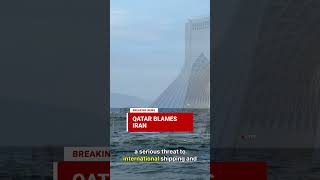
 Reference video
Reference video may not be directly related to the topic of this article
US and Iran Engage in Military Escalation and Maritime Conflict
Military strikes and shipping attacks destabilize global energy.
Event Overview
The U.S. and Iran have entered a cycle of retaliatory strikes, including U.S. attacks on Iranian air defenses and boats and Iranian missile strikes on U.S. bases in Jordan, Bahrain, and Kuwait. Tensions have peaked with attacks on commercial tankers in the Strait of Hormuz, leading President Trump to threaten Iranian infrastructure and announce plans to assert control over the strait. This escalation follows the death of Ayatollah Ali Khamenei on February 28 and the failure of a Memorandum of Understanding between the two nations.
Issue Summary
Bias Distribution
Bias Signal Summary
266 articles — 7 signal types detected.
Coverage Tone Distribution
· AlignedRedder = higher bias. Larger area = more outlets. Click an outlet to jump to its position.
AI Analysis
Missing are the perspectives of the Iranian government and its citizens, as well as the viewpoints of regional allies and neutral nations affected by the instability in the Strait of Hormuz. There is also a lack of analysis regarding the internal power struggle and succession dynamics within Iran following the death of Ayatollah Khamenei.
Related Coverage
Coverage flow
Coverage volume
Focus shift
사건 전개
Recommended Reads
U.S. launches back-to-back waves of strikes against Iran
CBS News
U.S. fires a new wave of strikes on Iran and hits a tanker trying to skirt its blockade - NPR
NPR
Iran reports new attacks on military targets on its largest island near the Strait of Hormuz - AP News
AP News
Trump’s time is running out to avoid a nightmare Strait of Hormuz scenario - Fortune
fortune.com
Analysis of 29 outlets reveals a divide: 12 focused on the volatility of US military and diplomatic maneuvers, 9 advocated for aggressive action and maximum pressure against Iran, and 8 were critical of US hegemony and the instability caused by its foreign policy.
The writer intends to inform the reader that military conflict has escalated between the US and Iran following a presidential declaration that a ceasefire is no longer in effect.
The writer intends to link Trump's foreign policy decisions directly to immediate economic hardship for consumers, specifically through the lens of rising energy costs.
The writer intends to convey that while the Iran war is creating a significant global energy crisis and stalling inflation progress, the global economy is showing resilience through technological advancement and regional disparities in impact.
The writer intends to convey a state of high-stakes volatility and imminent danger, framing the situation as a cycle of 'tit-for-tat' aggression where diplomatic efforts are overshadowed by military threats and the symbolic weight of a leader's burial.
The writer intends to establish his personal authority and first-hand observation of Saudi Arabia's growth to set the stage for a discussion on how conflict disrupted that progress.
The writer intends to portray Speaker Johnson as being in a precarious position, caught between the President's military demands and a fractured GOP conference divided over fiscal responsibility and election policy.
The writer intends to frame Rep. McCormick's rhetoric as aggressive and boastful, using words like 'brags' to instill a perception of the representative as a hawk pushing for extreme military escalation.
The writer intends to convey a sense of escalating regional instability and high-stakes military confrontation, framing the situation as a volatile cycle of infrastructure attacks and retaliatory strikes.
The writer intends to convey a sense of instability and inevitable escalation in the Middle East, framing the situation as a 'violent cycle' where diplomatic efforts are failing and regional allies are being dragged into a broader conflict.
The writer intends to convey a sense of high regional instability and precariousness, suggesting that the path to peace is being actively undermined by military escalation and political volatility on both sides.
Loading comments...