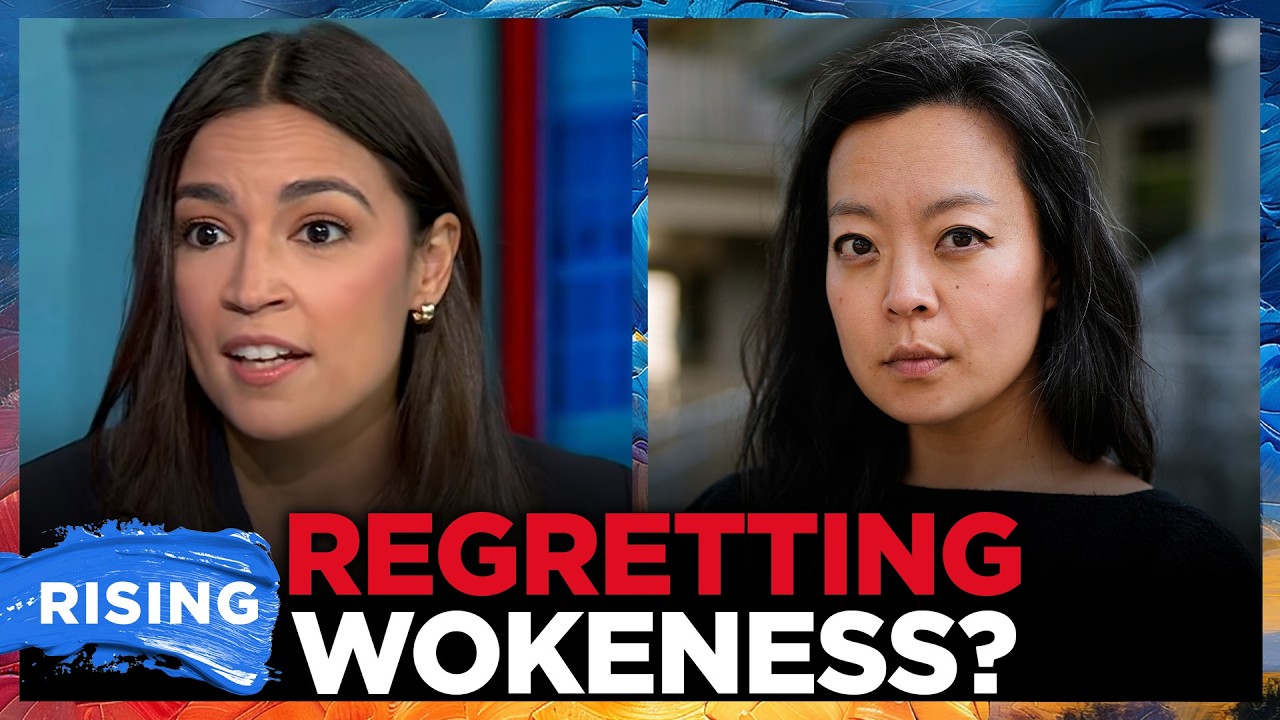
 Reference video
A video on the same topic from an external channel, separate from the reports analyzed here.
Alexandria Ocasio-Cortez describes 'Woke 1' era as crazy
AOC distances herself from past progressive excesses.
Event Overview
Representative Alexandria Ocasio-Cortez used the phrase 'Woke 1' during an ABC interview to describe a period of progressive excesses around 2020. She characterized this era as 'crazy,' referring to fringe policy ideas such as abolishing prisons and defunding the police. The term 'Woke 1' was coined by NYC Council Member Chi Osse. This framing is being used by some Democratic socialist candidates to distance themselves from past radical positions to remain politically viable.
Issue Summary
Bias Distribution
Bias Signal Summary
7 articles — 5 signal types detected.
Coverage Tone Distribution
· ConflictRedder = higher bias. Larger area = more outlets. Click an outlet to jump to its position.
AI Analysis
All 7 articles focus on AOC's distancing from "Woke 1" rhetoric, showing a pattern of framing her shift as a strategic political pivot, which characterizes the coverage as centered on political opportunism. 3 of 7 articles specifically link this shift to the inherent extremism of the progressive movement, creating a pattern of ideological critique that describes the movement as a series of escalating excesses. Only 1 outlet discusses the role of Donald Trump in weaponizing these excesses to force a progressive retreat, revealing a substantial missing perspective regarding the external political pressures and strategic victories of the opposition.
Critical coverage dominates with high to very high bias intensity.
Related Coverage
Related Cards
Coverage flow
Coverage volume
Focus shift
Story timeline
Recommended Reads
Don't Let AOC Retcon Her Starring Role in 'Woke 1'
Reason
What does ‘Woke 1’ mean, and where does the phrase come from? What to know
Washington Examiner
The Democrats Can’t Just Laugh Off ‘Woke 1’
The Atlantic
Trump Won the War on Wokeness. AOC Is the Proof.
Newsweek
Six outlets analyzed the situation through a critical lens: two framed AOC's pivot as a dishonest political maneuver, two portrayed the progressive movement as extreme, and two focused on the strategic political victories regarding "wokeness."
The writer intends to portray Ocasio-Cortez's attempt to distance herself from past 'woke' rhetoric as a desperate and insincere political pivot, leading the reader to view the Democratic left as opportunistic and unaccountable.
The writer intends to frame AOC's recent distancing from 'woke' rhetoric as a dishonest and opportunistic political pivot, urging the reader to view her as complicit in far-left excesses rather than a reformed moderate.
The writer intends to frame the 'Woke 1' era as a period of irrationality and fringe extremism, suggesting that current socialist candidates are only distancing themselves from these views now to avoid political liability.
The writer intends to portray the 'Woke 1' era as a period of irrationality and extremism, suggesting that current socialist candidates are only distancing themselves from these views now to avoid political liability.
The writer intends to frame the progressive movement as inherently extreme and evolving, suggesting that even its proponents admit to past 'craziness' while signaling the arrival of a new, potentially more concerning phase.
The writer intends to instill a sense of urgency and warning in the reader, suggesting that the Democratic Party's strategy of ignoring or laughing off its radical past is futile because political opponents will permanently weaponize these positions.
The writer intends to convince the reader that Donald Trump has achieved a strategic victory over 'wokeness' by forcing even its most prominent champions, like AOC, to admit that previous progressive iterations were 'crazy.' The intended effect is to frame Trump not just as a political winner, but as the architect of a shift in the American political center that has marginalized extreme progressive rhetoric.
Loading comments...