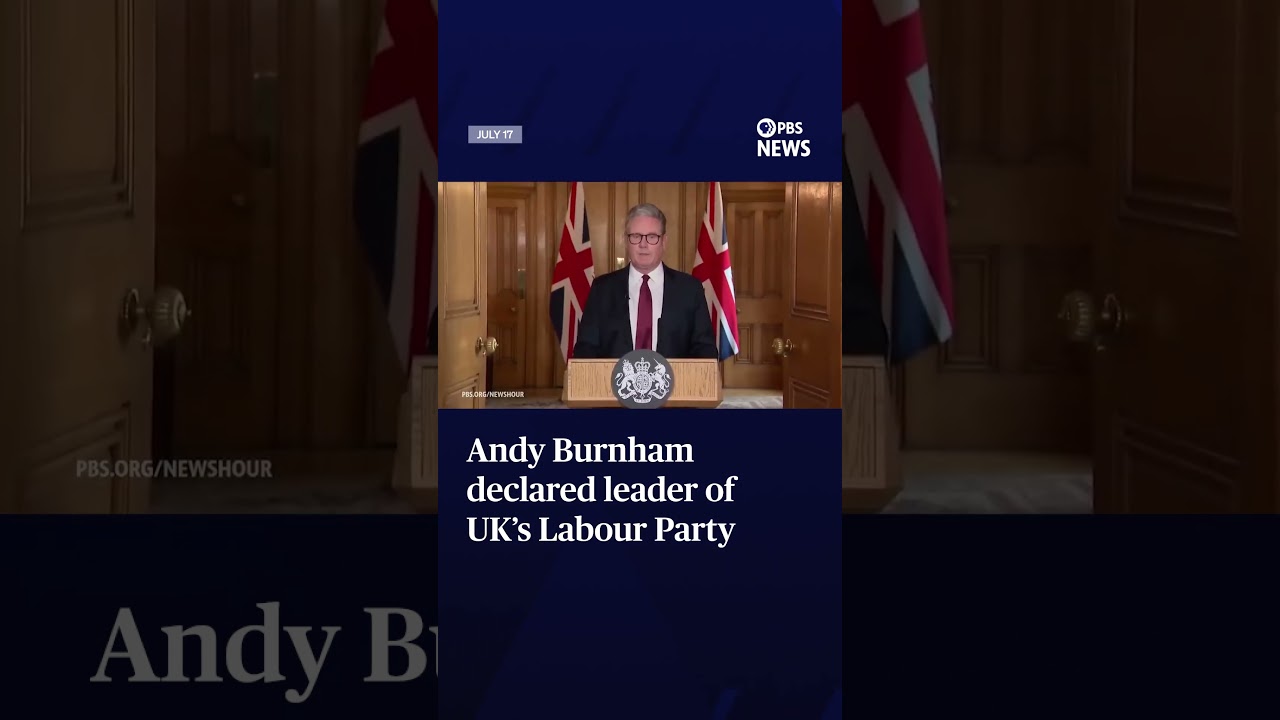
 Reference video
Reference video may not be directly related to the topic of this article
Andy Burnham Becomes UK Prime Minister
Andy Burnham replaces Keir Starmer as UK Prime Minister.
Event Overview
Andy Burnham has become the UK Prime Minister after replacing Keir Starmer as leader of the Labour Party. Upon taking office, Burnham appointed a new cabinet, including John Healey as Chancellor and Ed Miliband as Foreign Secretary, while removing several Starmer allies. His initial agenda focuses on the cost-of-living crisis, reindustrialization, and decentralizing power, including a small electricity tax cut funded by scrapping digital ID cards.
Issue Summary
Bias Distribution
Bias Signal Summary
19 articles — 5 signal types detected.
Coverage Tone Distribution
· ConflictRedder = higher bias. Larger area = more outlets. Click an outlet to jump to its position.
AI Analysis
All 4 articles highlight the removal of Starmer allies and the appointment of Healey and Miliband, showing a consistent focus on cabinet restructuring as a means of establishing a decisive break from previous leadership. 3 of 4 articles emphasize the cost-of-living crisis and electricity tax cuts, reflecting a pattern of prioritizing immediate populist economic relief in the initial agenda. No articles address the potential diplomatic reactions or international stability concerns regarding the change in leadership, representing a substantial missing perspective on the global implications of the transition.
Coverage is balanced with mid-to-high intensity bias.
Related Coverage
Coverage flow
Coverage volume
Focus shift
Story timeline
Recommended Reads
Andy Burnham: The likely next U.K. prime minister
CBS News
Who is Andy Burnham, the U.K.'s new prime minister? - NPR
NPR
Trump Says Scots Are 'Dancing in the Streets' Over Burnham's Oil Plans
Newsweek
I grew up near Andy Burnham. This is what shaped the UK’s new PM
The Guardian
Coverage across 14 outlets was largely critical or cautious, with five framing the leadership as a continuation of failure and three expressing apprehension over economic and operational readiness. Meanwhile, four outlets focused on descriptive accounts of the political transition, while only two viewed the leadership as pragmatic and stabilizing.
The writer intends to present Andy Burnham as a relatable, working-class alternative to the traditional London-centric political elite, framing his rise as a victory for regional identity and 'common man' advocacy.
The writer intends to instill a sense of apprehension or skepticism regarding the new prime minister's readiness for global leadership by contrasting his limited diplomatic background with the severity of current international crises.
The writer intends to frame the start of Burnham's premiership as a delicate balancing act between domestic green pledges, industrial pressure, and external influence from Donald Trump.
The writer intends to present Andy Burnham as a transformative figure who offers a necessary shift in leadership to address systemic national failures and political threats that his predecessor could not handle.
The writer intends to present Andy Burnham as the frontrunner for the premiership, highlighting his political identity as a socialist to prepare the reader for a shift in U.K. leadership.
The writer intends to frame the UK's political leadership as unstable while positioning Burnham as a charismatic alternative to Starmer, specifically highlighting the potential impact of his administration on the media and entertainment industries.
The writer intends to frame the leadership transition as a moment of economic uncertainty, highlighting the tension between Burnham's left-leaning tendencies and the demands of the financial markets.
The writer intends to frame the transition of power as a significant shift toward a leader (Burnham) with strong regional appeal in the North, while presenting Starmer's exit as dignified and successful.
The writer intends to frame the leadership change as part of a pattern of instability ('revolving door') while presenting Burnham as a figure of potential radical change who must navigate a precarious domestic and international landscape.
The writer intends to frame Andy Burnham as a political figure whose ideological identity is ambiguous—balancing 'business-friendly' rhetoric with 'socialist' policies—thereby creating a sense of uncertainty regarding the future of UK-US relations under Trump.
Loading comments...