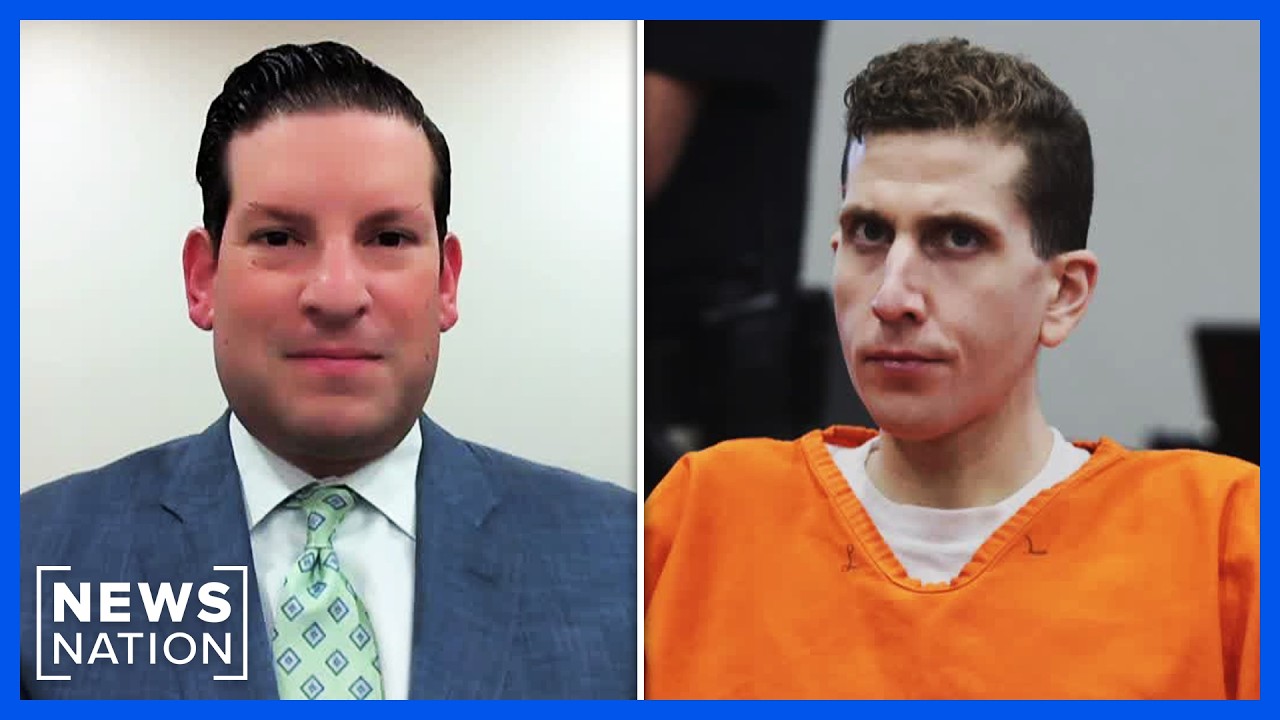
 Reference video
Reference video may not be directly related to the topic of this article
Bryan Kohberger Seeks to Withdraw Guilty Plea
Convicted murderer challenges plea deal for Idaho killings.
Event Overview
Bryan Kohberger, who pleaded guilty to the 2022 murders of four University of Idaho students to avoid the death penalty, has filed a petition for post-conviction relief. Kohberger claims he received ineffective counsel, was misled by false promises, and is actually innocent. He is currently representing himself and seeking to withdraw his plea, a move that has been condemned by the victims' families.
Issue Summary
Bias Distribution
Bias Signal Summary
8 articles — 3 signal types detected.
Coverage Tone Distribution
· AlignedRedder = higher bias. Larger area = more outlets. Click an outlet to jump to its position.
AI Analysis
All 4 articles mention Kohberger's petition to withdraw his guilty plea and claims of ineffective counsel, showing a consistent focus on the legal mechanism of post-conviction relief. 2 of 4 articles emphasize the reactions of the victims' families and the perceived manipulation of the legal system, highlighting a pattern of framing the petition as a calculated tactic rather than a legal right. Only 1 outlet focuses on the prosecution's failure to secure a detailed confession during the initial plea agreement, revealing a substantial missing perspective regarding the specific shortcomings of the original plea deal's design.
Critical coverage dominates with mid-to-high intensity bias.
Related Coverage
Coverage flow
Coverage volume
Focus shift
사건 전개
Recommended Reads
Bryan Kohberger files a petition to challenge his guilty plea and conviction - NBC News
NBC News
Man convicted in Idaho college student killings seeks to withdraw guilty plea
The Guardian
'A narcissist': Family hit out at Bryan Kohberger for challenging murder conviction
BBC
Bryan Kohberger waived his appeal rights but plans on pursuing post-conviction relief
Fox News
Three of the six outlets framed the legal challenge as narcissistic manipulation and a source of pain for victims, while the remaining three focused on systemic failures, the conflict between legal claims and finality, or the emotional context of the developing story.
The writer intends to present the legal development as a conflict between a convicted murderer's claims of legal coercion and the victims' families' desire for finality and retribution.
The writer intends to present Kohberger's legal challenge as a contradiction to his own previous guilty plea and the victims' families' desire for justice, framing the challenge as an attempt by a convicted murderer to evade a deal he willingly accepted.
The writer intends to present Kohberger's attempt to overturn his conviction as a legal maneuver that contradicts his previous admission of guilt and causes further pain to the victims' families.
The writer intends to inform the reader of a significant legal reversal in a high-profile murder case, framing it as a developing story with added emotional weight due to a coinciding Netflix documentary.
The writer intends to frame Kohberger's attempt to overturn his plea as a narcissistic act that causes further pain to the victims' families, leading the reader to view his legal challenge as opportunistic rather than legitimate.
The writer intends to frame Kohberger's claim of innocence as a contradictory and opportunistic attempt to undermine a voluntary guilty plea, thereby reinforcing the reader's perception of his guilt and the cruelty of his actions toward the victims' families.
The writer intends to frame Kohberger's legal petition not as a legitimate quest for justice, but as a calculated psychological game played by a narcissist to manipulate the court, the media, and the victims' families.
The writer intends to frame the prosecution's plea agreement as a failure that empowers a 'monster' to manipulate the legal system, thereby evoking a sense of injustice and frustration in the reader regarding the victims' re-traumatization.
Loading comments...