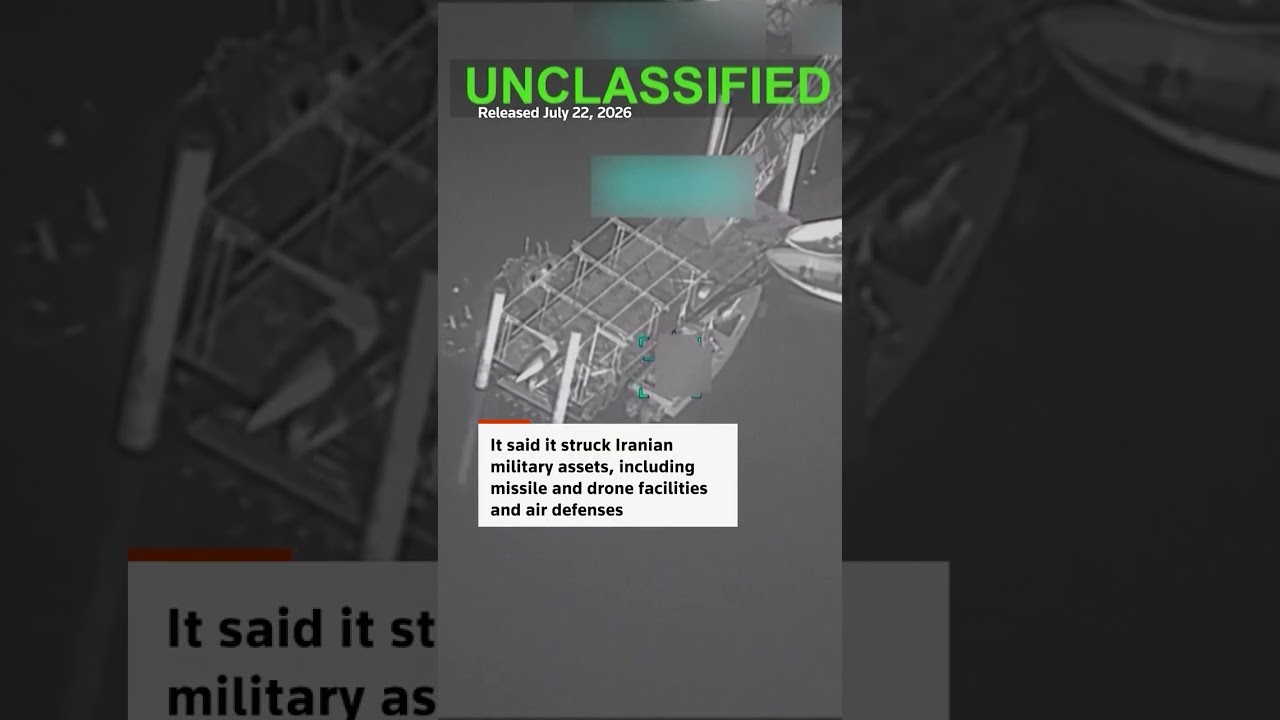
 Reference video
Reference video may not be directly related to the topic of this article
US and Saudi Arabia Strike Iranian-Backed Forces
Military escalations threaten global energy security.
Event Overview
The U.S. and Saudi Arabia conducted joint military strikes against Iranian-backed militias in Iraq, resulting in the deaths of at least 20 fighters and six Iranian advisers. Iran responded by launching missile attacks targeting U.S. forces at the Muwaffaq Salti Air Base and a CENTCOM center in Jordan, as well as striking oil tankers in the Strait of Hormuz. These actions follow a cycle of retaliation and the collapse of interim agreements, leading to decreased commercial shipping traffic in the region. President Donald Trump has vowed to retaliate further, though some reports suggest a munitions shortage may have limited subsequent strikes.
Issue Summary
Bias Distribution
Bias Signal Summary
25 articles — 5 signal types detected.
Coverage Tone Distribution
· ConflictRedder = higher bias. Larger area = more outlets. Click an outlet to jump to its position.
AI Analysis
17 of 29 articles focus on government criticism → a pattern of scrutinizing official narratives and military decisions → a dominant critical framing of the administration's role.
Only 1 outlet discusses the impact on African energy policy → a pattern of linking Middle Eastern instability to global structural energy dependencies → a substantial missing perspective regarding the geopolitical consequences for the Global South.
2 of 29 articles maintain a neutral stance → a pattern of providing concise briefings or general instability reports without taking a side → a minimal presence of objective reporting.
Critical coverage dominates with mid-level bias intensity.
Related Coverage
Related Cards
Coverage flow
Coverage volume
Focus shift
Story timeline
Recommended Reads
U.S. and Iran resume attacks. And, Fauci to face Senate questions on COVID pandemic
NPR
The Iran War Exposed Africa’s Biggest Energy Weakness
time.com
Is Involvement In The War With Iran In America’s Best Interest? A Daily Caller News Foundation Debate
Daily Caller
Joint operation with US opens Saudi Arabia to barrage from Iran and its proxies
Washington Examiner
Ten of the 19 outlets focused on warnings of regional instability and geopolitical volatility, while six emphasized skeptical framing of official narratives and strategic failures. The remaining outlets were split between neutral informational briefings (2) and advocacy for internal structural reforms (1).
The writer intends to highlight the volatility of the conflict by contrasting a surprise military escalation with the administration's claims of diplomatic progress.
The writer intends to portray the US as a capable defender and Trump as a calculated leader who balances military strength with a desire to avoid unnecessary civilian casualties, while framing Iran as an aggressive but internally fractured regime.
The writer intends to provide a concise, multi-topic briefing that informs the reader of the day's most critical global and domestic developments, instilling a sense of being 'up to date' across diverse sectors (security, health, economy, environment).
The writer intends to present the current military escalation as a cycle of retaliation where the US and Saudi actions are framed as 'responses' to Iranian aggression, while simultaneously highlighting the humanitarian and economic instability (casualties and oil prices) resulting from the conflict.
The writer intends to convey that oil market stability is fragile and highly susceptible to geopolitical volatility and inventory data, leaving the reader with a sense of unpredictability regarding future price movements.
The writer intends to frame the Iranian regime as recalcitrant and hostile, thereby presenting military escalation as the only viable method to compel diplomacy.
The writer intends to instill skepticism in the reader regarding the official narrative of a munitions crisis, framing it as a convenient political excuse ('spin') rather than a definitive military constraint.
The writer intends to convince African policymakers and readers that relying on global stability for energy is a failed strategy, urging a shift toward structural internal reforms and domestic energy independence to avoid perpetual vulnerability.
The writer intends to portray the Trump administration as conducting a military campaign that lacks public support and clear objectives, while framing the administration's justifications as contradictory or based on diplomatic pressure rather than strategic stockpiles.
The writer intends to present the U.S. involvement in Iran as a polarizing issue with two distinct conservative/strategic schools of thought, leaving the reader to weigh the necessity of security against the cost of resources.
Loading comments...