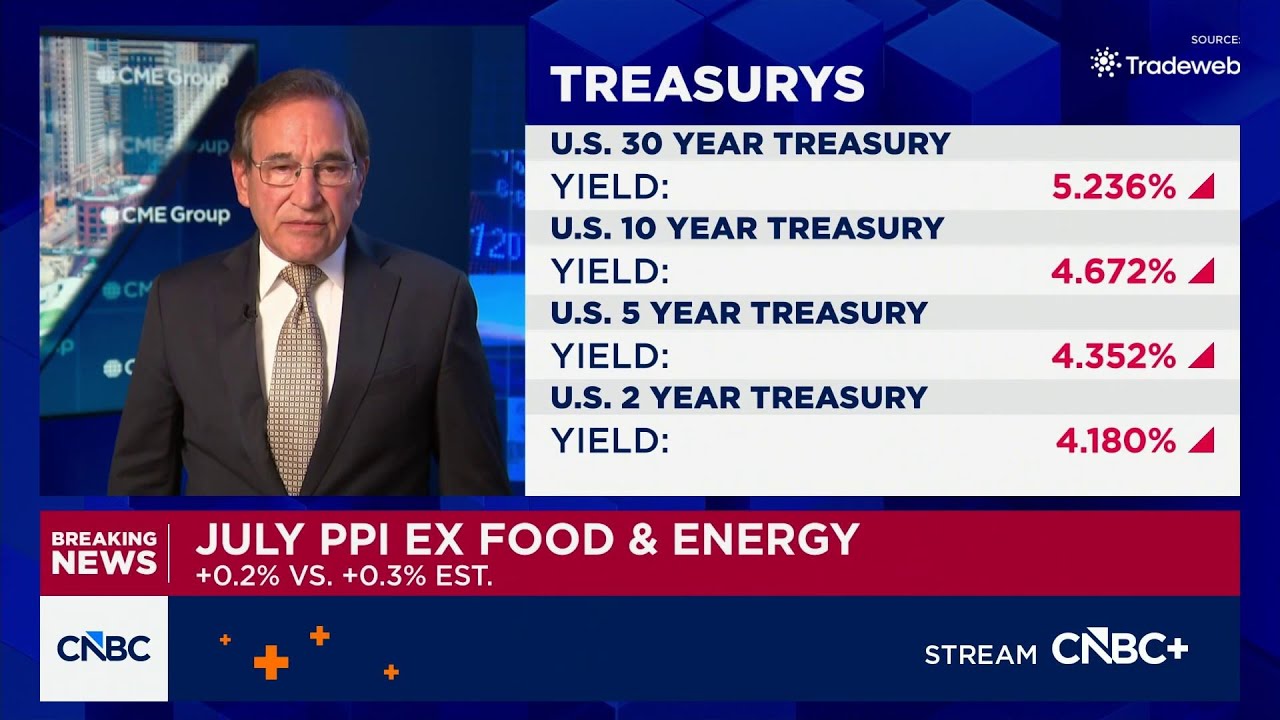
 Reference video
A video on the same topic from an external channel, separate from the reports analyzed here.
BLS Reports July Wholesale Inflation Slowdown
Cooling wholesale prices may influence Federal Reserve rate decisions.
Event Overview
The Bureau of Labor Statistics reported that wholesale prices remained unchanged in July, missing analyst expectations of a 0.2% increase. The annual producer price index (PPI) rose 4.7%, a decrease from 5.5% in June. While these figures suggest easing inflationary pressures, some reports note that consumer prices have outpaced wage growth for four months.
Issue Summary
Bias Distribution
Bias Signal Summary
Coverage Tone Distribution
· AlignedRedder = higher bias. Larger area = more outlets. Click an outlet to jump to its position.
AI Analysis
Three articles highlight the flat wholesale price data and the decrease in the annual PPI from 5.5% to 4.7% → a consistent focus on the cooling of inflationary pressures → a pattern of framing the data as a positive economic indicator. All 5 articles report on the Bureau of Labor Statistics figures → a uniform reliance on official government data → a high level of factual convergence across the coverage. Only 1 outlet mentions that consumer prices have outpaced wage growth for four months → a lack of integration regarding the real-income gap → a substantial missing perspective on the lived economic impact for consumers.
Neutral coverage dominates with low bias intensity.
Related Coverage
Related Cards
Coverage flow
Coverage volume
Focus shift
Story timeline
Recommended Reads
Wholesale price inflation slows last month as gas, food costs fall - AP News
AP News
Wholesale prices were flat in July, below expectations for 0.2% increase
CNBC
Wholesale price inflation slows last month as gas and food costs fall
PBS
Producer Price Index Shows Zero Inflation in July
Breitbart
Three of the five outlets expressed cautious optimism while warning about wages and Fed policy, while the remaining two offered more positive takes, with one focusing on cooling inflation and another framing the PPI data as a success.
The writer intends to present the slowing of wholesale inflation as a positive indicator for future consumer price trends, while tempering this optimism with warnings about wage stagnation and volatile energy costs.
The writer intends to frame the flat wholesale price data as a positive signal that inflation is cooling, leading the reader to perceive a decreased likelihood of immediate interest rate hikes by the Federal Reserve.
The writer intends to present the slowing of wholesale inflation as a positive indicator for future consumer price trends, while tempering this optimism with warnings about wage stagnation and the Federal Reserve's complex decision-making process.
The writer intends to present the July PPI data as a positive economic indicator by emphasizing that inflation was 'much better' than expected and highlighting specific price drops.
The writer intends to instill a sense of cautious optimism in the reader by framing the drop in wholesale prices as a precursor to lower consumer inflation and a reason for the Federal Reserve to pause rate hikes.
Loading comments...