 Reference video
Reference video may not be directly related to the topic of this article
US and Iran Military Escalation and Diplomatic Negotiations
Regional instability impacts global markets and security.
Event Overview
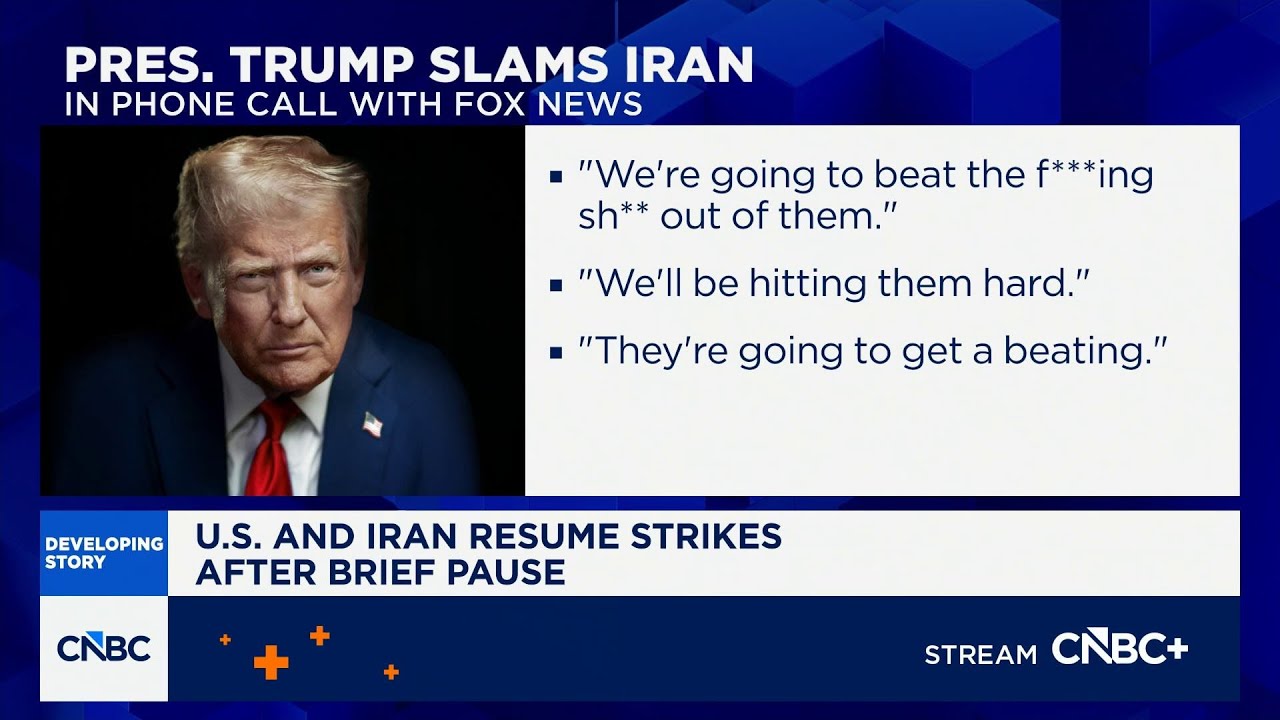
The US and Iran are engaged in a cycle of military strikes and threats, leading the US State Department to advise citizens to leave the Middle East. While President Trump has considered new strikes, he also postponed a planned attack following requests for a deal. Indirect negotiations via Qatar and Oman are currently underway to secure shipping routes through the Strait of Hormuz.
Issue Summary
Bias Distribution
Bias Signal Summary
18 articles — 5 signal types detected.
Coverage Tone Distribution
· ConflictRedder = higher bias. Larger area = more outlets. Click an outlet to jump to its position.
AI Analysis
Across 18 articles, 4 outlets focus on the strategic necessity of troop withdrawal or military commitment from allies, showing a pattern of prioritizing regional exit strategies and burden-sharing, which characterizes the coverage as focused on long-term military positioning. In 4 of 18 articles, the focus shifts to the immediate correlation between the decision to halt strikes and the decline in oil prices, establishing a pattern of linking geopolitical volatility to market fluctuations, which characterizes the coverage as economically driven. However, only 2 of 18 articles address the specific mechanisms of the indirect negotiations via Qatar and Oman, revealing a pattern of omitting the diplomatic process, which represents a substantial missing perspective regarding the actual efforts to secure shipping routes.
Critical coverage dominates with mid-to-high intensity bias.
Related Coverage
관련카드
Coverage flow
Coverage volume
Focus shift
사건 전개
Recommended Reads
Intuit, BILL, Workiva, Elastic, and Autodesk Stocks Trade Up, What You Need To Know
finance.yahoo.com
Trump Backs Down From Yet Another Empty Threat to Iran
Reason
U.S. agrees to pause attacks on Iran amid talks over ‘perimeters of a deal,’ Trump says - NBC News
NBC News
Live updates: Iran aiming to control a new Strait of Hormuz route, amid uncertainty over US talks - CNN
CNN
Coverage is divided, with five outlets portraying the administration as reckless or dysfunctional and four framing its decisions as strategic successes, while the remaining three focus on ally frustrations or geopolitical economic impacts.
The writer intends to frame the recent stock price increases as a logical result of macroeconomic shifts and AI industry growth, encouraging the reader to view market volatility as an opportunity to acquire high-quality assets.
The writer intends to convey that the situation in the Middle East has reached a critical and volatile stage, suggesting that the U.S. administration's approach lacks a coherent strategy and is leading to an unpredictable escalation.
The writer intends to convey a sense of imminent regional instability and high tension, framing the situation as a volatile waiting game where Israel is bracing for the consequences of Trump's unpredictable social media rhetoric and potential military actions.
The writer intends to frame the withdrawal of U.S. troops as a viable and strategic option by highlighting the endorsement of a former counterterrorism official, while presenting Trump's decision to avoid conflict as a calculated move toward a deal.
The writer intends to convey that oil market volatility is being driven by geopolitical uncertainty and contradictory signals from world leaders, leaving the reader with a sense of market instability.
The writer intends to portray President Trump as an indecisive and dysfunctional leader whose 'empty threats' and market-driven military timing undermine U.S. strategic goals and prolong the conflict.
The writer intends to instill a sense of alarm and condemnation in the reader, portraying the Trump administration's Iran policy as a reckless, amateurish failure that has compromised U.S. national security and global stability.
The writer intends to show the direct causal link between geopolitical decisions made by the U.S. president and global economic stability, specifically regarding energy costs and consumer burdens.
The writer intends to portray the current diplomatic shift not as a resolution of conflict, but as a pragmatic stalemate driven by mutual fear of costly escalation, while highlighting the fragility of the Iranian government's internal unity.
The writer intends to portray the current geopolitical situation as a fragile state of uncertainty where official US optimism is contradicted by military shortages, analyst skepticism, and internal political friction in both the US and Israel.
Loading comments...